
Council and housing association tenants have legal rights to repairs: what landlords must fix, how to report, and what to do if ignored. This free guide for council and housing association tenants in England and Wales is published by Council Repair Claims, a regulated claims management company, not a law firm.
Social Housing Repairs in England and Wales - Your Rights and What to Do

Knowing what your landlord must repair, how to report it, and what to do if nothing happens can make the difference between a problem that gets fixed and one that doesn't.
A repair request can start with something small: mould spreading behind a wardrobe, a boiler failing each winter, or a ceiling stain that keeps growing after a leak. The report goes in, a reference number arrives, and then the waiting begins. A contractor visits, takes notes, and leaves you unsure whether anyone has diagnosed the cause.
That delay is the practical problem with social housing repairs. Knowing that your landlord should act is not enough if you cannot show when the problem was reported, what happened next, and how long you were left in unsafe or unsuitable conditions. The strongest approach is organised and evidence-led, with your repair history, health impact, and escalation route kept together.
Key Points
- Your landlord is legally required to keep your home in good repair throughout your tenancy. This covers the structure, heating, hot water, plumbing, gas, and electrical installations
- The repair clock starts when your landlord knows about the problem. Report it promptly and, wherever possible, in writing. Verbal notice can be sufficient, but written reporting makes the date and content easier to prove
- Since October 2025, Awaab's Law requires emergency hazards to be investigated and safety work completed within 24 hours of your social landlord becoming aware of the problem
- Keep a clear evidence trail from the start: reference numbers, dated photographs, inspection documents, call logs, medical evidence, and receipts all help to show both the defect and its consequences
- If your landlord does not act, there are several escalation routes available, including your landlord's formal complaints process, the Housing Ombudsman, Environmental Health, and legal action
- No outcome can be guaranteed. You may be entitled to repairs or compensation where the evidence supports it, but every case depends on its specific facts and circumstances
If your landlord has ignored a repair you reported, it is worth finding out where you stand.
Our free eligibility check takes two minutes and carries no obligation to proceed.
What Your Landlord Must Repair
Your landlord should not treat every report as a cosmetic complaint. Social landlords have a legal responsibility to keep your home's structure and essential installations in repair. In plain English, that means your home must remain safe, usable, and reasonably fit to live in, not merely patched whenever a complaint becomes difficult to ignore.
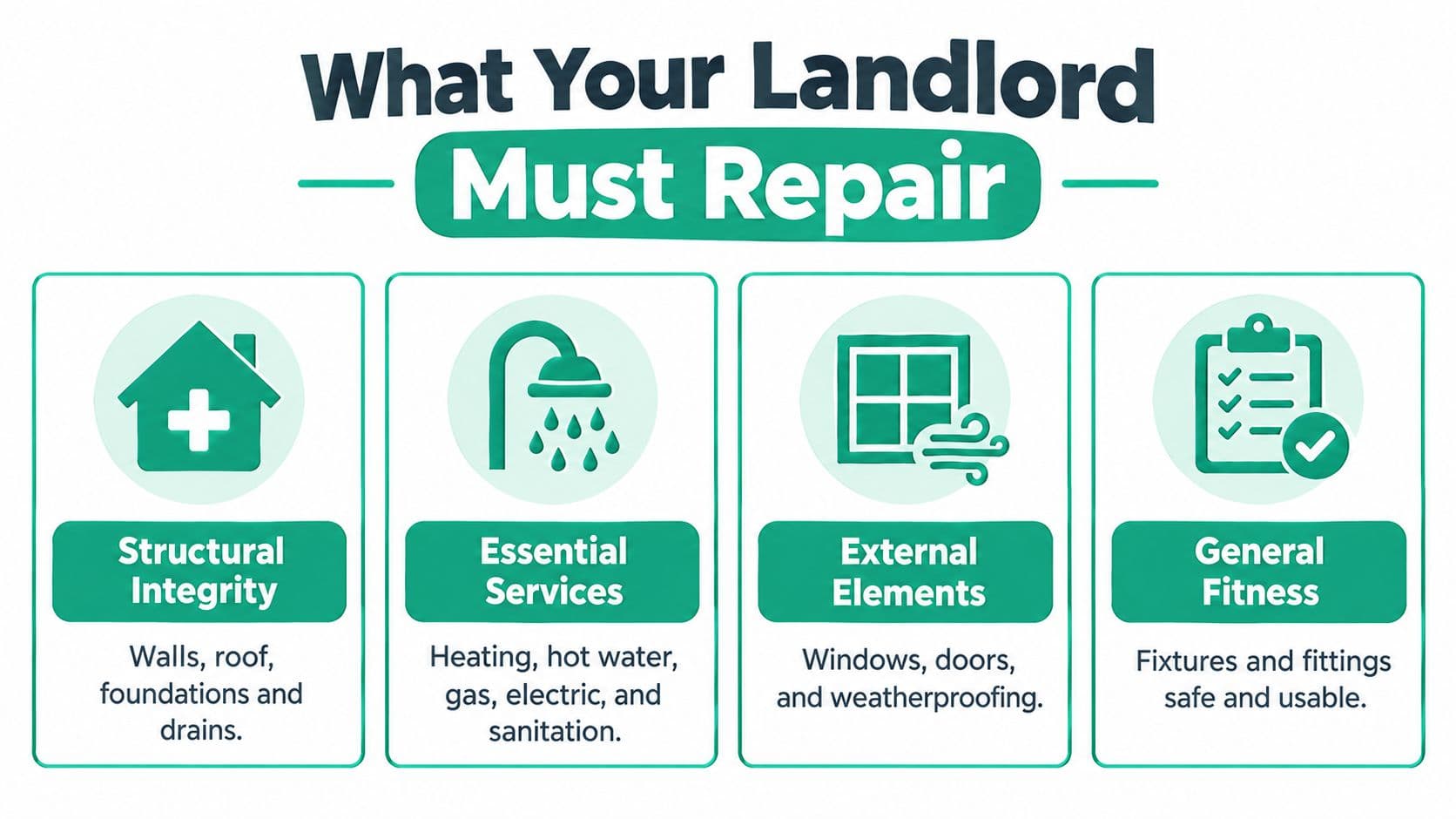
The duty covers the structure and exterior: walls, roof, foundations, and drains, as well as essential services including heating, hot water, gas, electrics, and sanitation. External elements such as windows, doors, and weatherproofing are included, along with general fitness: fixtures and fittings that must be safe and usable.
It can also include defects that create damp and mould, such as water ingress, inadequate ventilation, failed insulation, or a heating system that does not work properly. The Homes (Fitness for Human Habitation) Act 2018 gave tenants in England and Wales a clearer route to challenge unsafe conditions through the courts from 20 March 2019.
The scale of damp and mould alone shows why this matters. In February 2023, the Regulator of Social Housing estimated that 3% to 4% of roughly four million social homes had notable damp and mould, around 120,000 to 160,000 homes, while 1% to 2% had serious problems. That is why inspection should look for the cause, not just repaint the visible patch.
Some work falls outside ordinary repair duties. You may be responsible for damage caused deliberately or through careless use. Decorative changes and improvements may need permission rather than a repair request. Damage caused by a third party can require a different response, although your landlord may still need to address any resulting safety issue.
Reporting Repairs to Your Landlord
A repair case usually starts with one question: when did your landlord first know about the problem?
You do not need a particular legal phrase. Your report needs to identify the property, describe the fault clearly, explain any urgent risk, and give your landlord a fair opportunity to inspect and act. Reporting in writing is strongly recommended because it creates a time-stamped record, but where an emergency needs immediate attention, a phone call first and a written confirmation immediately after is also effective.
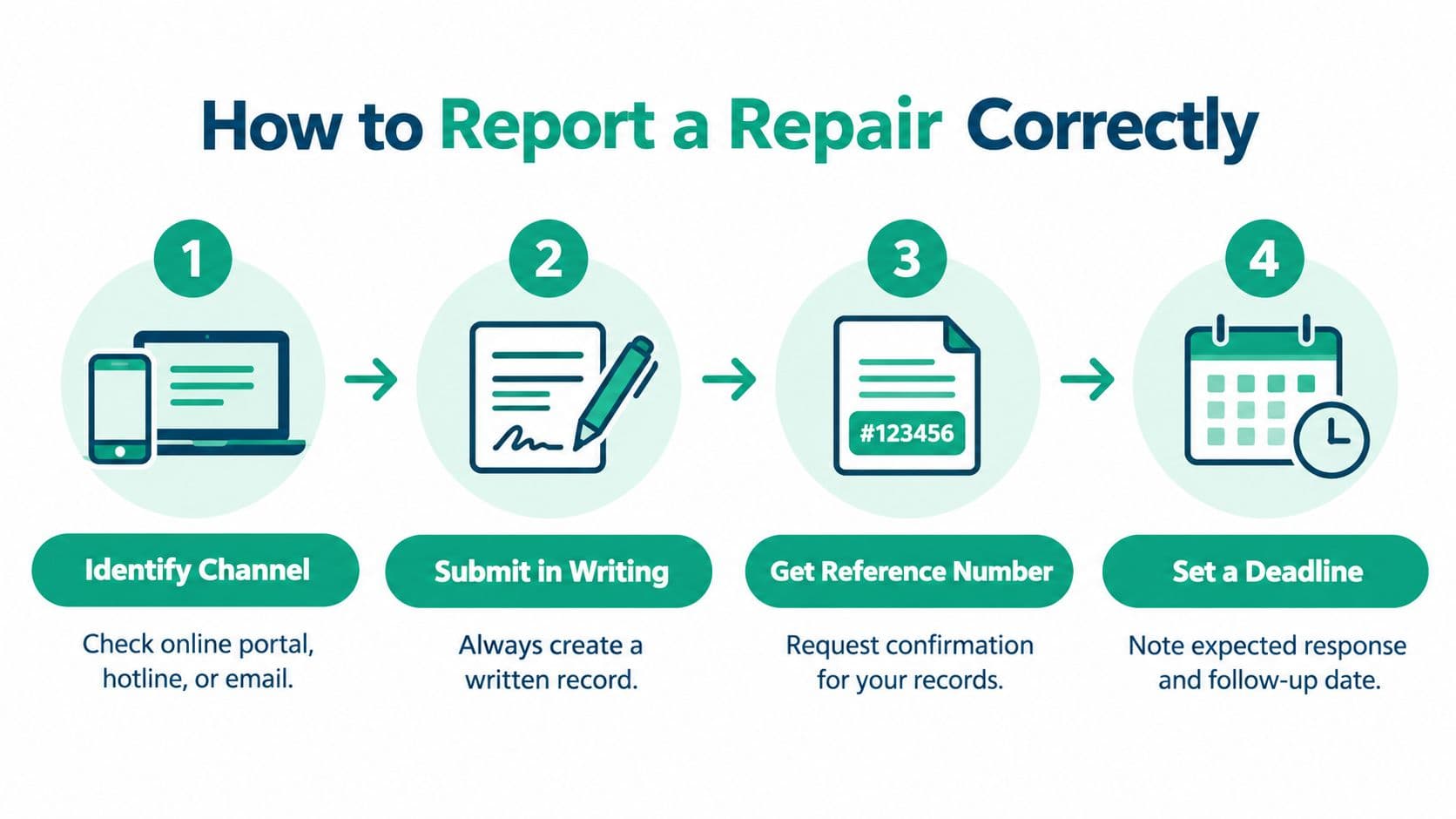
When you report a repair, include:
- The date: when the report is being made and, where relevant, when the problem first appeared
- The address: the full property address and the room affected
- The defect: describe what you can see or hear, such as mould, a leak, loss of heating, or a dangerous socket
- The impact: whether the room cannot be used, belongings are damaged, or anyone in the household is vulnerable or unwell
- Access details: suitable access information and any reasonable restrictions
- A response request: ask for written confirmation, a reference number, an inspection date, and the expected next step
Always save or screenshot an online report. If you report by phone, follow it immediately with a short email confirming what you said. The date of your first report is when your landlord's legal obligation to act begins.
A contractor's visit does not automatically mean the issue has been resolved. Ask what was found, whether further work is needed, and when the next appointment or written response will arrive. If no response follows, a chase email should refer to the original report and its reference number rather than starting the story again.
If a significant damp or mould problem has been reported, Awaab's Law requires your landlord to investigate within 10 working days. For emergency hazards, the deadline is 24 hours. See: Awaab's Law - What It Means for Council and Housing Association Tenants
Building Your Evidence
A clear evidence pack lets your landlord, adviser, Housing Ombudsman investigator, or solicitor understand your case quickly. It should answer four questions: what was wrong, when was it reported, what did your landlord do, and how did the delay affect your household?
Keep a repair chronology listing each report date, reference number, contact channel, inspection, appointment, missed visit, and completed work. Keep every written exchange in full: emails, portal confirmations, letters, text messages, and complaint responses. Take dated photographs of affected areas regularly so any progression is visible over time. If your health has been affected, speak to your GP and ask for it to be noted in your records.
What to Do If Your Landlord Does Not Act
If your landlord has been told about a problem and has not fixed it within a reasonable time, you have several escalation routes available. Each serves a different purpose and they do not all need to be followed in strict sequence.
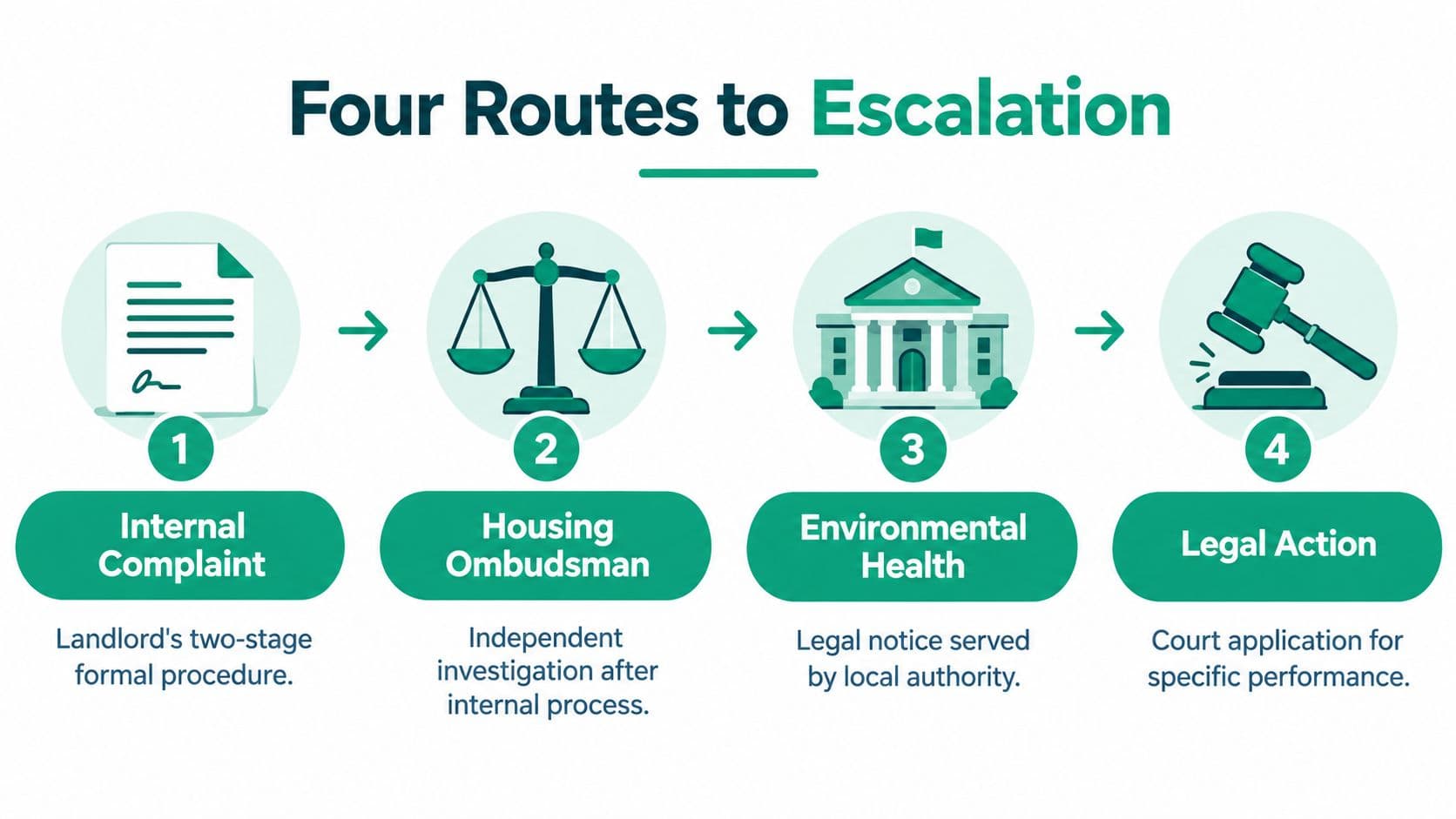
Internal complaint. Every council and housing association must have a formal complaints procedure. This is usually the required first step before the Housing Ombudsman will investigate.
Housing Ombudsman. Once your landlord's complaints process is exhausted, the Housing Ombudsman Service is free and independent. It can order repairs, require an apology, and award compensation. It covers England only. Welsh tenants should contact the Public Services Ombudsman for Wales.
Environmental Health. Your local council's Environmental Health team can inspect your home and, where they identify a serious hazard, serve a legal notice on your landlord requiring action. This route runs independently of the complaints and Ombudsman routes and can be used where there is an immediate health or safety concern.
Legal action. A solicitor can write formally to your landlord requiring repairs and, where appropriate, compensation. Most housing disrepair solicitors work on a no-win, no-fee basis. Court proceedings can be issued if the landlord does not respond adequately, though most cases settle before reaching a hearing.
Compensation and What to Expect
Compensation is not an automatic result of a repair delay. The assessment turns on the evidence: the seriousness and duration of the defect, the rooms affected, inconvenience, health impact, damaged belongings, and any financial loss that can be proved. No adviser or solicitor should promise a particular outcome before reviewing your records.
There are several routes to a financial remedy. Your landlord may offer compensation during the complaints process alongside repairs. The Housing Ombudsman may direct a landlord to pay compensation where service failure is established. A county court may award damages where the evidence supports a legal claim.
Where a solicitor is involved on a no-win, no-fee basis, you should understand the full terms before signing, including what happens if the claim succeeds, what costs may be deducted from any compensation, and what cooperation you must provide. A referral is most useful when your landlord has been notified, the defect remains unresolved, and the evidence shows meaningful impact on your health or daily life.
Practical Checklist
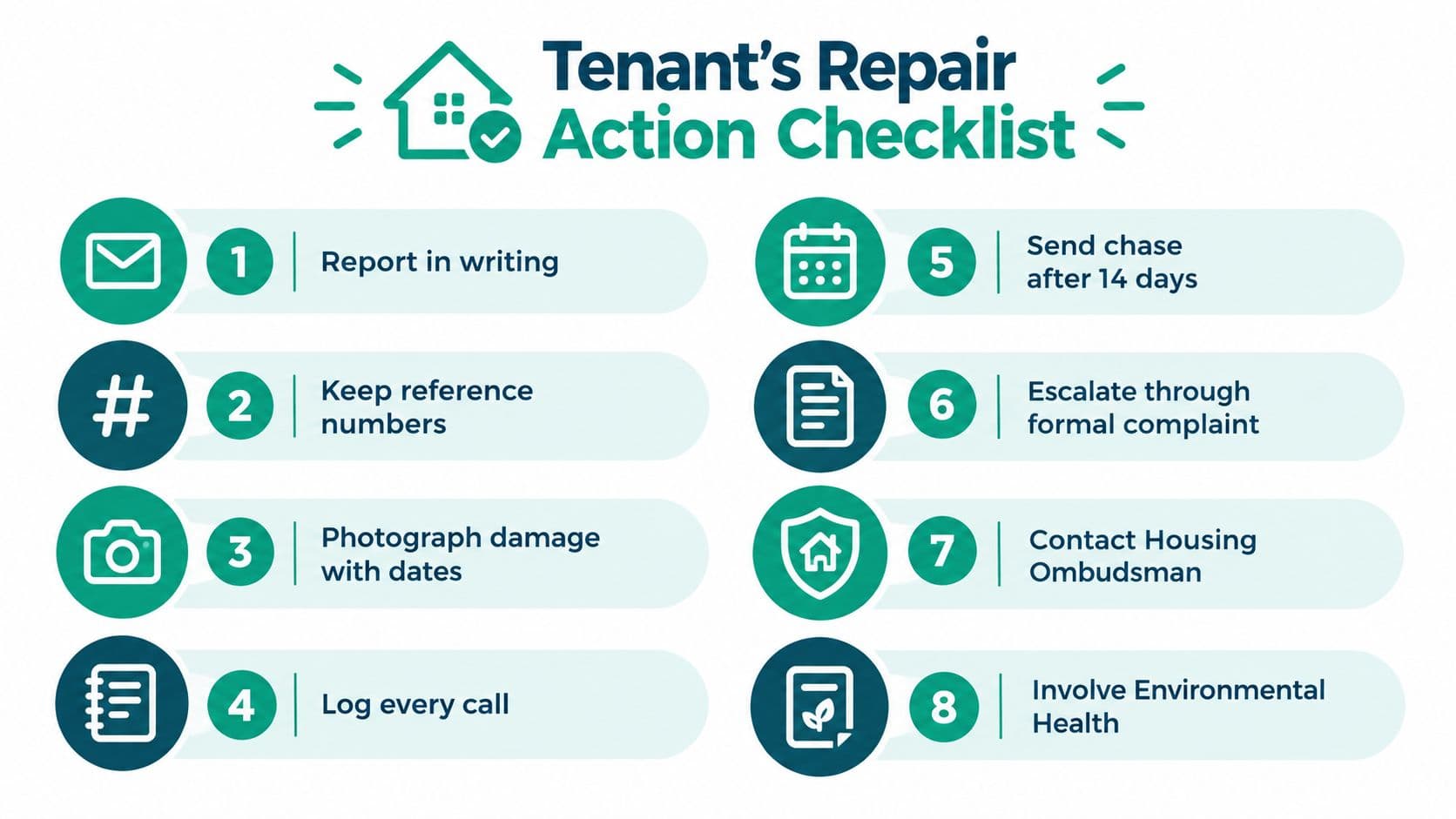
If you are dealing with unresolved repairs, work through the following steps in order:
- Report the problem and describe the defect, location, risk, and impact. In writing is strongly recommended. Verbal reporting can also count, but a written record is much easier to prove
- Keep reference numbers and save every confirmation you receive
- Photograph the damage with dates and keep the original files
- Log every call with the date, the person you spoke to, and what was said
- Send a chase after 14 days if no meaningful response has arrived, unless the reported risk requires faster action
- Escalate through your landlord's formal complaints procedure when ordinary repairs have stalled
- Contact the Housing Ombudsman after the landlord's complaints process if the issue remains unresolved
- Involve Environmental Health where a serious housing hazard needs local authority attention
If your landlord has ignored a repair you reported, it is worth finding out where you stand.
Our free eligibility check takes two minutes and carries no obligation to proceed.
Frequently Asked Questions
Related guides

Landlord responsibilities
6 min read
What your council or housing association landlord must legally repair, how quickly they must act, and what to do if they ignore your reports.
Read guide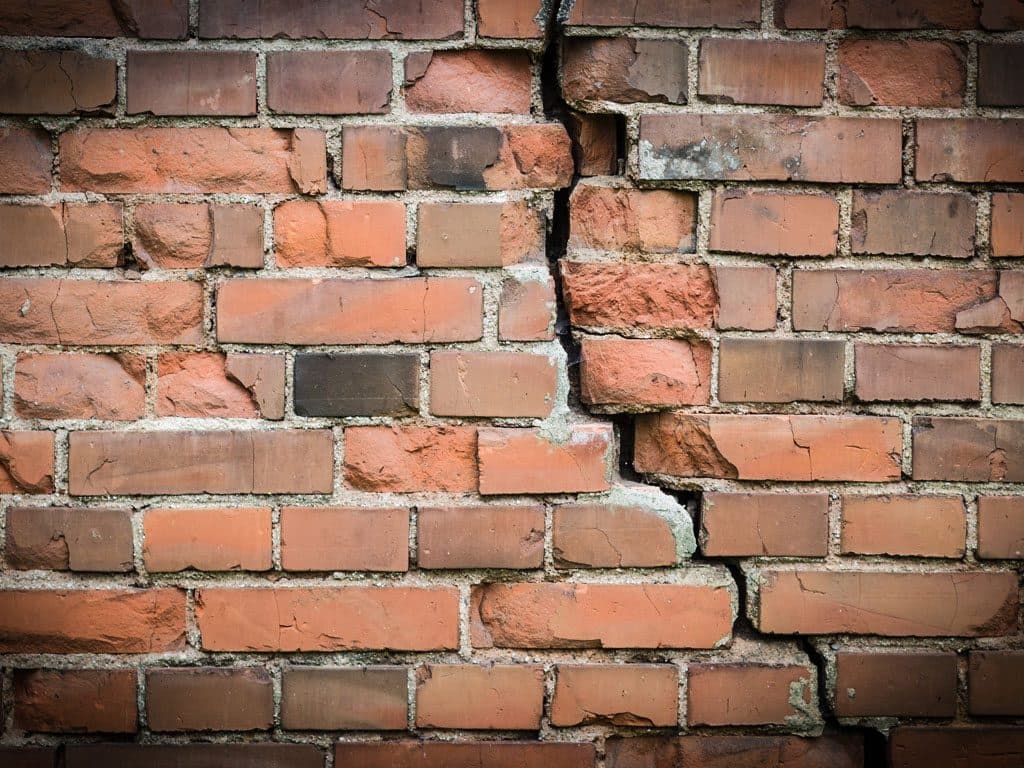
Types of housing disrepair
6 min read
A plain-English guide to common housing disrepair: damp, mould, leaks, heating, electrics, pests, and structural problems your landlord must fix.
Read guide
Step-by-Step Housing Disrepair Claims Checklist
3 min read
A practical housing disrepair claims checklist for council tenants: report the problem in writing, gather evidence, and understand next steps.
Read guideNeed Help?
Council Repair Claims can help you understand your rights and connect you with a regulated solicitor on a no-win, no-fee basis, provided you co-operate fully with your solicitor and act honestly throughout. You are not required to use our service. You can also complain directly to your landlord or contact the Housing Ombudsman for free.
Contact us on 03330 111104 or email info@councilrepairclaims.co.uk
This article is for general information only and does not constitute legal advice. The law and published guidance can change, and the correct next step depends on your tenancy, the defect, the evidence, and your location. Always seek advice from a regulated solicitor, housing adviser, or relevant public body before taking legal action.
Content correct as of Sep 2026.