
Loss of amenity is reduced use and enjoyment of your home from disrepair. You may claim compensation even without extra bills. This free guide for council and housing association tenants in England and Wales is published by Council Repair Claims, a regulated claims management company, not a law firm.
What Loss of Amenity Means in a Housing Disrepair Claim
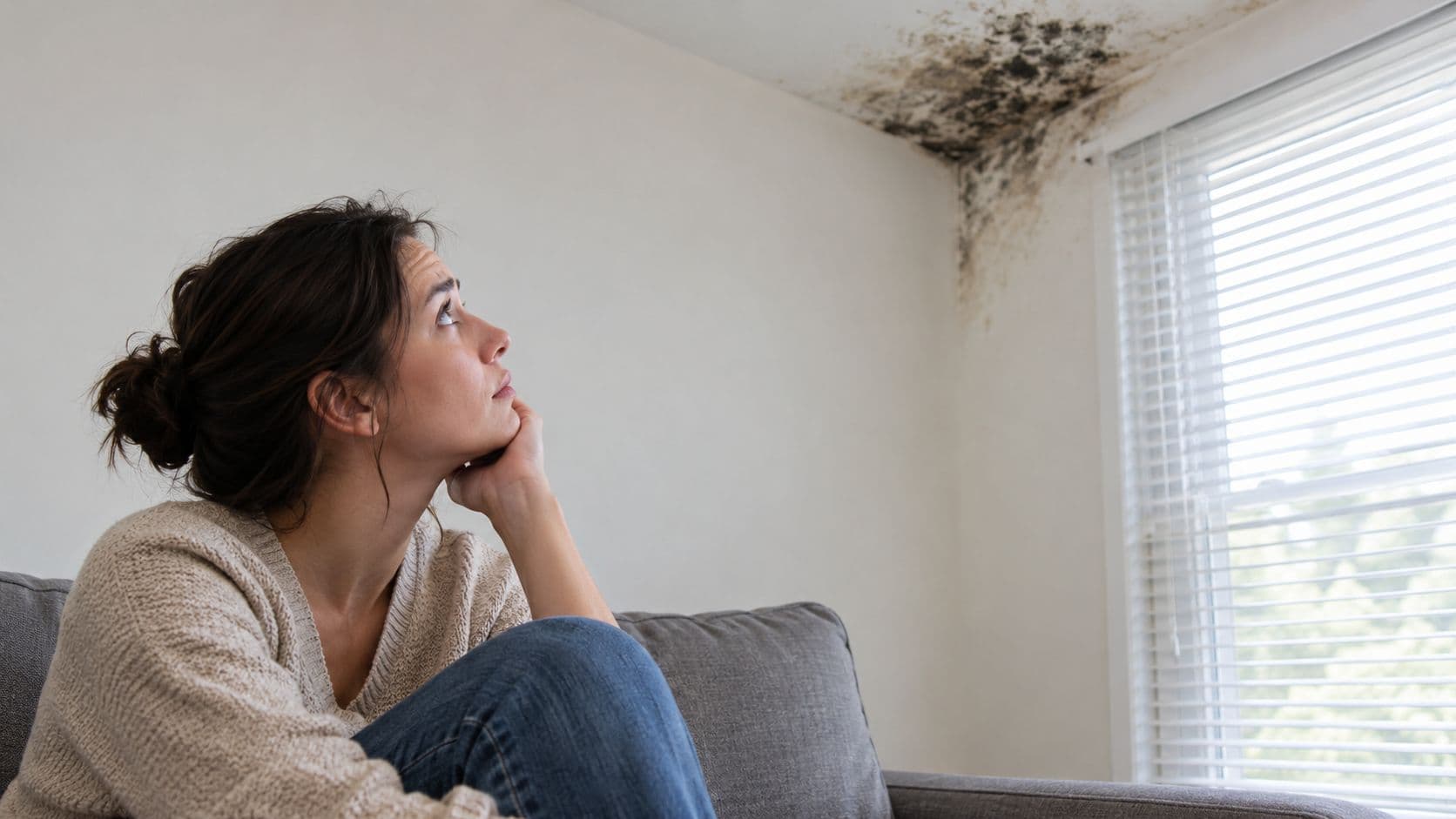
A musty bedroom, a living room that never feels warm, or a bathroom that repeatedly goes out of use can turn an ordinary home into a place that is hard to live in.
Many tenants assume that claiming compensation requires a shopping list of extra expenses. That is not the case. In housing disrepair, the reduced use and enjoyment of your home, what lawyers call loss of amenity, can itself form the basis of a claim, even where extra spending has been modest or hard to separate out.
The English Housing Survey found that only 64% of households living in homes with damp were satisfied with their accommodation, compared with 89% of households in homes without damp, a 25 percentage point difference. That gap captures what loss of amenity means in practice.
Key Points
- Loss of amenity in housing disrepair means the reduced use, comfort, and enjoyment of your home caused by a defect your landlord failed to repair
- You do not need receipts or extra spending to have a loss of amenity claim. The loss is about the lived experience of the defect, not just money that left your pocket
- Loss of amenity is calculated separately from special damages, which are provable financial losses such as damaged belongings, extra heating costs, or temporary accommodation
- The clearest evidence describes the effect room by room: which space was affected, what changed in daily life, and how long the disruption lasted
- A bedroom that cannot be slept in, a living room kept shut because of mould, or heating that fails repeatedly all reduce the practical value of your home. That reduction may be compensated
- Your landlord must have been told about the problem before a claim can proceed. Written notification is strongly recommended, though verbal reporting can also be sufficient
If your landlord has ignored a repair you reported, it is worth finding out where you stand.
There is no charge for our assessment, and no obligation to continue.
What Loss of Amenity Actually Means
Loss of amenity in housing disrepair is about use, comfort, and enjoyment. It is the difference between a home that works properly for the people living in it and one that does not.
Consider a bedroom affected by severe damp. Clothes smell stale. Walls feel wet. A child keeps waking in the night, unsettled by the smell and the cold. The room still exists, but the household cannot use it in the normal way. That is loss of amenity. The room has lost its value to the tenant regardless of whether any extra money was spent.
A straightforward test is room by room. If the defect makes a room colder, smellier, harder to use, or unusable altogether, amenity is likely already reduced.
Loss of Amenity Is Not the Same as Financial Loss
This distinction is where many tenants lose clarity.
Loss of amenity is the reduction in use, comfort, and enjoyment during the period of disrepair. It is assessed by asking how much less valuable the home was to the tenant while the defect continued.
Special damages are provable financial losses: receipts for extra heating, damaged belongings, cleaning materials, or the cost of staying elsewhere. These are calculated separately and need their own evidence trail.
A tenant may have no extra receipts at all and still have a real loss of amenity claim. The key question is not "did I spend more money?" It is "was daily life made worse?"
If the disrepair affected sleep, privacy, cooking, washing, studying, or caring responsibilities, that impact matters even where no neat invoice was generated.
How Loss of Amenity Is Calculated
There is no fixed formula that applies to every case. Two tenants with the same type of mould can end up with different assessments if one room was barely affected and the other was unusable for months.
A common approach is a notional rent reduction: asking what percentage of the rent the tenant was effectively overpaying for a home that was not delivering what it should. The percentage varies depending on how seriously the defect affected daily life, how many rooms were affected, how long the problem lasted, and whether the landlord had repeated opportunities to fix it.
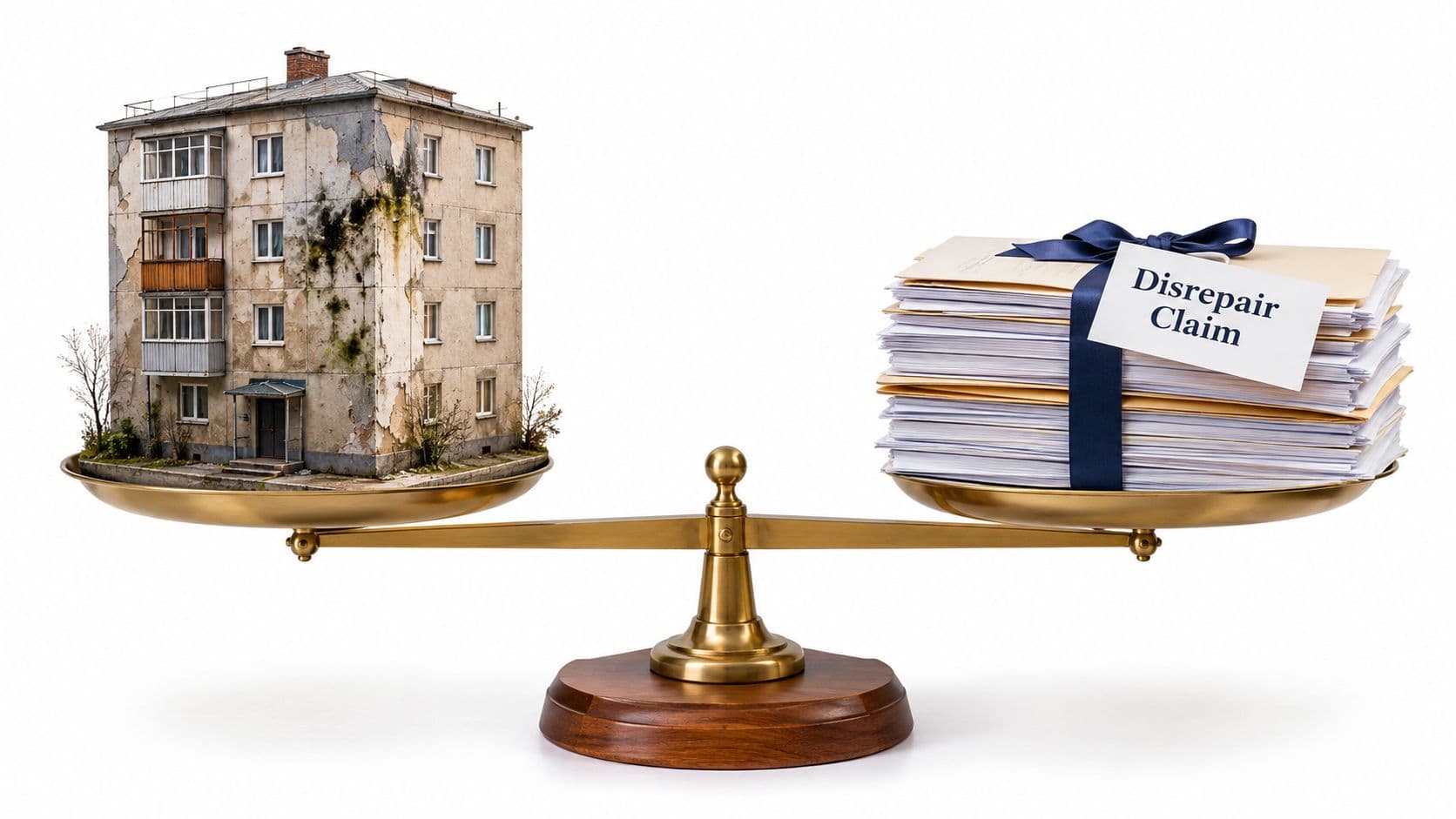
The Housing Ombudsman's compensation guidance recognises loss of amenities including loss of heating, hot water, and loss of use of a room as compensable. Courts and the Ombudsman both look at:
- The severity of the defect and its effect on daily life
- How long the problem lasted after the landlord was told
- Whether the household included vulnerable people, such as children or someone with a health condition
- Whether the landlord missed appointments, ignored reports, or applied repeated temporary fixes
See also
Room by Room: Where Amenity Loss Occurs
Bedroom. Severe damp or mould in a bedroom can make it unusable for sleeping. Clothes stored there may be damaged. A child who wakes repeatedly because of cold or smell is experiencing the loss directly.
Living room. A heating failure that keeps recurring forces the household to gather in one cold room or run alternative heaters constantly. The space no longer provides normal comfort.
Bathroom. Leaks, no hot water, or repeated access problems make basic daily routines (washing, bathing, cooking preparation) rushed, awkward, or difficult. The disruption may be brief each time but cumulative over weeks or months.
When defects overlap. Damp in a bedroom, a heating failure in the hallway, and mould in the bathroom all affect the home at once. The household adjusts in several directions simultaneously, which is more disruptive than a single contained defect.
How to Evidence Loss of Amenity
The clearest claims describe the effect, not just the defect.
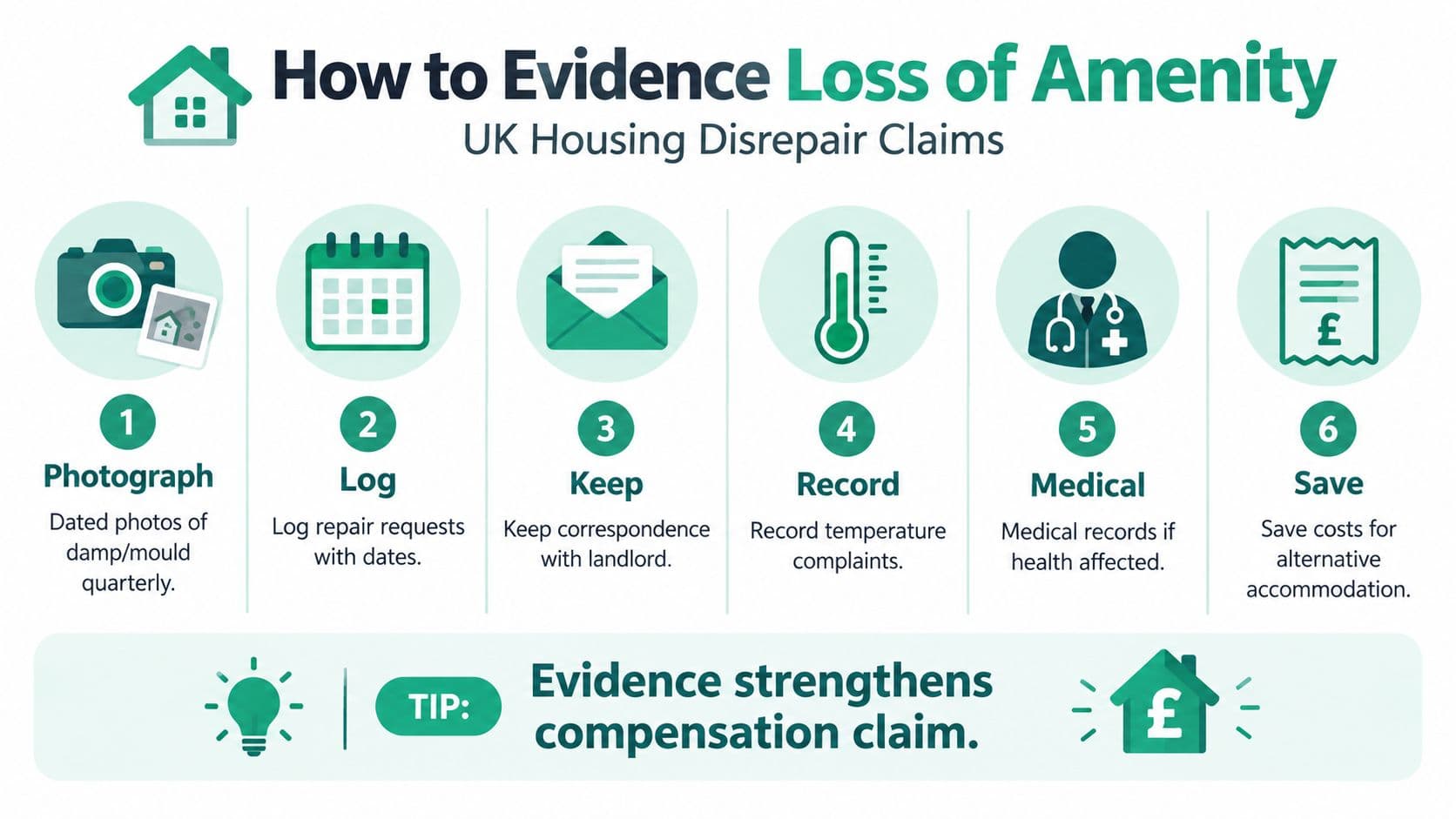
Dated photographs. A photo showing the defect and the room, taken regularly from the same position, shows how the problem developed over time. A single image is less useful than a series.
An amenity-impact schedule. For each defect, keep a short dated record covering: when the landlord was first told, which appointments were kept or missed, which room or amenity was affected, what changed in daily life, and when the problem was resolved or whether it is still ongoing. A note that says "the room felt damp" is thin evidence. "The bedroom could not be used for sleeping for three weeks because of visible mould, a strong smell, and three missed repair appointments" is the kind of description that makes the loss easy to follow.
A daily impact log. Record the effect on the household the same day it happens. Detail fades quickly. A short note at the time is usually worth more than a reconstructed account written months later.
Repair correspondence. Every report, every response, every missed appointment, every promise made and broken. The timeline of the landlord's awareness matters as much as the condition of the property.
Medical records. If the disrepair has affected health, GP records noting the link between housing conditions and symptoms are particularly valuable. Ask your GP to record this connection explicitly.
Financial records. Keep receipts for anything that cost money as a direct result of the defect. These go into the special damages part of the claim, not the loss of amenity part, but both may be relevant.
See also
What Your Landlord Must Do First
Your landlord must be told about the problem before any claim can proceed. Written notification is strongly recommended because it creates a clear dated record, but verbal reporting can also be sufficient if you note the date and details at the time.
The date of your first notification is where the loss of amenity period starts. If the landlord was told in January and failed to repair until June, the period of reduced amenity runs from when they knew.
Since October 2025, Awaab's Law requires council and housing association landlords in England to investigate significant damp and mould within 10 working days of being notified, and to investigate emergency hazards within 24 hours. A landlord that misses these deadlines after being told has failed in a legal obligation.
See also
What to Do Next
Report the defect in writing today if you have not already done so, or follow up a verbal report in writing. State which room is affected, what the problem is, how it is affecting the household, and request an urgent inspection.
Start your dated record now. Note conditions in the home, any contact with the landlord, and the daily impact on the household. The strongest evidence is built while the problem is still active.
Use your landlord's formal complaints procedure if the repair is not resolved within a reasonable time.
Seek advice if the problem has continued for a significant period, if health has been affected, or if the landlord has repeatedly failed to complete a lasting repair.
See also
If your landlord has ignored a repair you reported, it is worth finding out where you stand.
There is no charge for our assessment, and no obligation to continue.
Frequently Asked Questions
Related guides

Housing disrepair compensation
5 min read
How housing disrepair compensation is calculated for council tenants: general and special damages, what strengthens a claim, and what to expect.
Read guide
What evidence do you need for a housing disrepair claim?
6 min read
Photos, written reports, medical records and losses: evidence that strengthens a housing disrepair claim, even if you have not kept records.
Read guide
Awaab's Law
6 min read
From October 2025, social landlords in England must investigate damp, mould, and emergencies within strict legal deadlines under Awaab's Law.
Read guideNeed Help?
Council Repair Claims can help you understand whether your situation may support a disrepair claim and, if appropriate, refer you to a regulated solicitor. There is no charge for our assessment, and no obligation to continue. If you choose to go ahead, the solicitor will explain their own terms and any charges before you agree.
Contact us on 03330 111104 or email info@councilrepairclaims.co.uk
This article is for general information only and does not constitute legal advice. Housing disrepair outcomes depend on the facts, evidence, the tenancy, and the landlord's obligations.
Content correct as of Oct 2026.