
You may be able to claim compensation
If heating or hot water has broken down and has not been properly fixed, you may be able to claim repairs and compensation from your council or housing association.
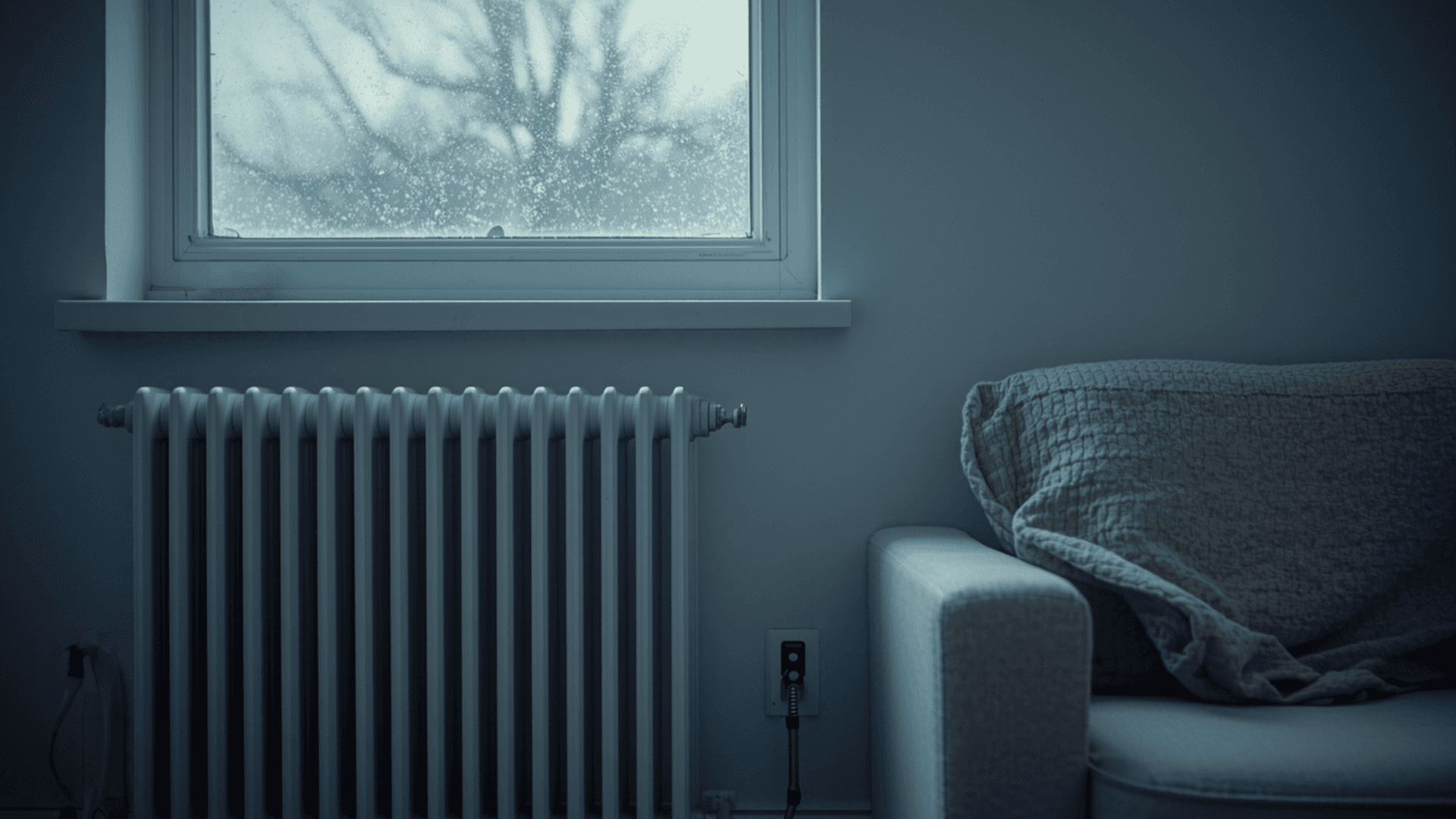
If you rent from a council or housing association and your heating or hot water has broken down and has not been properly fixed, you may be able to make a no heating compensation claim for repairs and compensation. Here is how heating systems fail, what your landlord must do, how the seasons and Awaab's Law come into it, and what evidence helps.
If heating or hot water has broken down and has not been properly fixed, you may be able to claim repairs and compensation from your council or housing association.
Council and housing association landlords must keep the installations for heating and hot water in repair: the boiler, pipes, radiators and controls.
The longer it goes on, and the colder the weather, the more it can affect a claim. Report early and keep records.
Children, older people and anyone with a health condition are more at risk in a cold home. Tell your landlord in writing.
A broken boiler is the classic case, but heating problems come in many forms. The pattern of failure can tell you a lot about the cause.
| Problem | What you might notice | What it can mean | Who fixes it |
|---|---|---|---|
| No heating at all | The boiler will not start, radiators stay cold, or the display shows a fault code | A boiler fault, a failed pump or controls, or a problem with the gas or power supply | Your landlord |
| Heating in some rooms only | Some radiators stay cold, or the home never warms up | Air or sludge in the system, faulty valves, or a system too small for the home | Your landlord for the system; you can bleed radiators if you are comfortable doing so |
| No hot water | Taps run cold or only lukewarm | A boiler or cylinder fault, a failed immersion heater or a diverter valve fault | Your landlord |
| Repeated breakdowns | It works for a few days, then fails again | An underlying fault that was never fixed, or an ageing boiler | Your landlord. Ask whether a replacement is planned |
| Communal heating outage | A whole block or street loses heat and hot water | A fault at the shared plant or pipework | Your landlord, or its managing agent or contractor |
What fails, and who deals with it, depends on the kind of system in your home.
Combi boilers heat water on demand, so a failure usually means no heating and no hot water. System and regular boilers have a hot water cylinder, which may have an electric immersion heater as a back-up.
Common in flats without gas. They charge overnight and release heat through the day. If they are not charging or giving out heat, report it. Fixed heaters are your landlord's responsibility.
One plant heats many homes, so an outage can affect a whole block and may take longer to fix. Report it even if neighbours have. Each household should log its own report.
Increasingly common in newer and retrofitted homes. Controls and settings differ from a boiler, so ask for a proper explanation, and report faults as you would with any heating.
Less common, but the duty applies to the installation. Running out of fuel is different from a fault, but failed burners, tanks and flues are repair issues.
Temporary heaters supplied by a landlord are a stopgap. They are not a replacement for a working heating system.
Find out in minutes if you could claim compensation for no heating or no hot water. It costs you nothing to check.
We are a claims management company, not a law firm. You don't have to use us: you can complain to your landlord, then the relevant ombudsman*.
*England: Housing Ombudsman. Wales: Public Services Ombudsman
Records of servicing, and of repeated call-outs, help show what your landlord knew and what it did about it.
Landlords must have gas appliances and flues checked every year by a Gas Safe registered engineer, and give you a copy of the record within 28 days of the check. It is a safety check, not a full service.
Regular servicing helps catch faults before winter. A landlord that skips servicing, or keeps patching an ageing boiler, may be relevant to a claim.
Landlords need access for checks and repairs. Keep appointments, or rearrange them in writing. Repeatedly refusing access can weaken a claim.
A few checks are safe. Anything involving gas, the boiler casing or the flue is not.
Smell gas, or think it might be carbon monoxide?
Open doors and windows, do not use flames or switches, leave the property, and call the National Gas Emergency number on 0800 111 999. In an emergency call 999.
Check the settings, the timer and the batteries.
Note any fault code and take a photo. Your landlord will want it.
If a radiator is cold at the top, you may be able to bleed it, if you are comfortable and your landlord allows it.
Check the gauge, but only top it up if the manual and your landlord say you may.
In freezing weather this can stop some boilers. Follow the manufacturer's guidance, and only if you can reach it safely.
Leave the casing, gas pipework and flue to a Gas Safe registered engineer.
Gas work must be done by someone on the Gas Safe Register.
It can produce carbon monoxide, which is dangerous.
Treat every alarm as real, and act on it straight away.
If you must in an emergency, tell them straight away and keep the invoice.
Many landlords will supply heaters. Ask in writing and note what you were given, and when.
Concentrate on the room you use most, and keep doors closed to hold the warmth.
Boil a kettle for washing and washing-up, and ask your landlord about alternatives if you have small children.
Check on children, older relatives and neighbours. If anyone is unwell, get medical advice.
Winter is when heating breaks down, and when landlords are busiest. The time of year can also shape a claim.
Try your heating when the weather first turns, and report faults straight away. Landlords get busy as soon as it turns cold.
Breakdowns matter most now. Use the emergency repairs line and ask for temporary heating. A fault in a cold snap can carry more weight in a claim.
Ask what caused any winter failure, whether it was only patched, and whether a replacement is planned.
Faults often go unnoticed until the heating is switched on again. Ask for a check now, so it works when you need it.
Awaab's Law is being phased in for council and housing association landlords in England. Heating is brought in from the second phase.
Damp and mould hazards, and all emergency hazards, must be dealt with within fixed time limits.
Extends to a wider range of significant hazards, including excess cold and excess heat, falls, structural collapse, fire and explosions, electrical safety and hygiene.
Expected to cover almost all remaining hazards, apart from overcrowding.
A cold home with no hot water affects health, money and day-to-day life.
Cold homes are linked to breathing problems, heart problems and low mood. Children, older people and people with health conditions are most at risk.
Cold walls collect condensation, and mould follows. See our damp and mould guide.
No hot water makes washing, bathing children, laundry and cooking harder.
Electric heaters, launderettes and takeaway meals add up quickly.
In freezing weather, an unheated home is at risk of frozen pipes.
Living in the cold wears people down, especially with children or health conditions in the home.
These duties apply to your tenancy automatically, and your landlord can't contract out of them.
Section 11 requires your landlord to keep the installations for space heating and heating water in repair and working order. That covers boilers, pipes, radiators and controls.
Read the guideYour home must be fit to live in. A home that is too cold, or has no hot water, may not be.
Read the guideAn annual gas safety check by a Gas Safe registered engineer, with a copy of the record given to you.
Emergency hazards and damp and mould are covered now. Excess cold is due to be added from 30 November 2026.
Read the guideCouncil and housing association landlords owe the same core repair duties. The route for complaining differs slightly, depending on who your landlord is.
If you rent from your council, or from an organisation it has set up to manage its homes, that landlord owes the repair duties above. Follow its complaints process first, then take it to the relevant ombudsman*. With communal heating, your landlord usually remains responsible to you, even if a contractor or managing agent runs the system.
Housing association tenants have the same core repair rights, whether the landlord is a large national association or a small local one. Complain to your housing association first, then take it to the relevant ombudsman*.
Not sure who your landlord is? We can help check.
*England: Housing Ombudsman. Wales: Public Services Ombudsman
| Date | Heating | Hot water | Room temp | Reported and reply |
|---|---|---|---|---|
| [date] | None | None | [°C, room] | Called [time], ref [number] |
| [date] | None | Cold only | [°C, room] | Emailed; told engineer due [date] |
| [date] | Working | Working | [°C, room] | Engineer visited, part ordered |
An example layout. Keep it up to date every day.
No heating compensation and no hot water compensation are not fixed amounts. They depend on the factors below, and there are no guarantees.
The heating or hot water fixed properly, and temporary heating while you wait.
For the discomfort and disruption of living in the cold, especially in winter.
For the disruption to washing, cooking, laundry and family life.
Provable extra costs, and any effect on your health.
There is no set figure. What a claim could be worth depends on the facts. These are the things that usually matter:
Your solicitor can explain what your circumstances may support once your case has been assessed.
Use the emergency repairs line and follow up in writing. Say who is vulnerable, and ask for temporary heating and a reference number.
Note each day heating and hot water are off, room temperatures, and every call, visit and reply.
If it is not fixed in a reasonable time, use your landlord's complaints process.
It is free. If your landlord has not resolved the complaint, you can take it further.
You are not required to use us, but a free check takes a few minutes.
*England: Housing Ombudsman. Wales: Public Services Ombudsman
Find out in minutes if you could claim compensation for no heating or no hot water. It costs you nothing to check.
We are a claims management company, not a law firm. You don't have to use us: you can complain to your landlord, then the relevant ombudsman*.
*England: Housing Ombudsman. Wales: Public Services Ombudsman
Not sure who your landlord is? We can help check.
Answer a few quick questions about your home and what you've already reported.
What evidence helps your claimWe review what you tell us to see if a solicitor may be able to help.
If it looks suitable, we refer you to a specialist solicitor, who explains what happens next.
If your case is referred to a solicitor, we receive a referral fee from them. This is not charged to you.
This is general information, not legal advice. Government guidance, Housing Ombudsman reports, and Awaab's Law guidance may be updated. Check the date on linked resources.
It takes a few minutes and costs nothing to find out.
Remember
You don't have to use a claims management company. There is no guarantee that using a claims management company will make your claim quicker or get you a better outcome. You can complain to your landlord, then the relevant ombudsman*, for free.
*England: Housing Ombudsman. Wales: Public Services Ombudsman
