
You may be able to claim compensation
If a roof leak has been reported and not properly fixed, you may be able to claim repairs and compensation from your council or housing association.
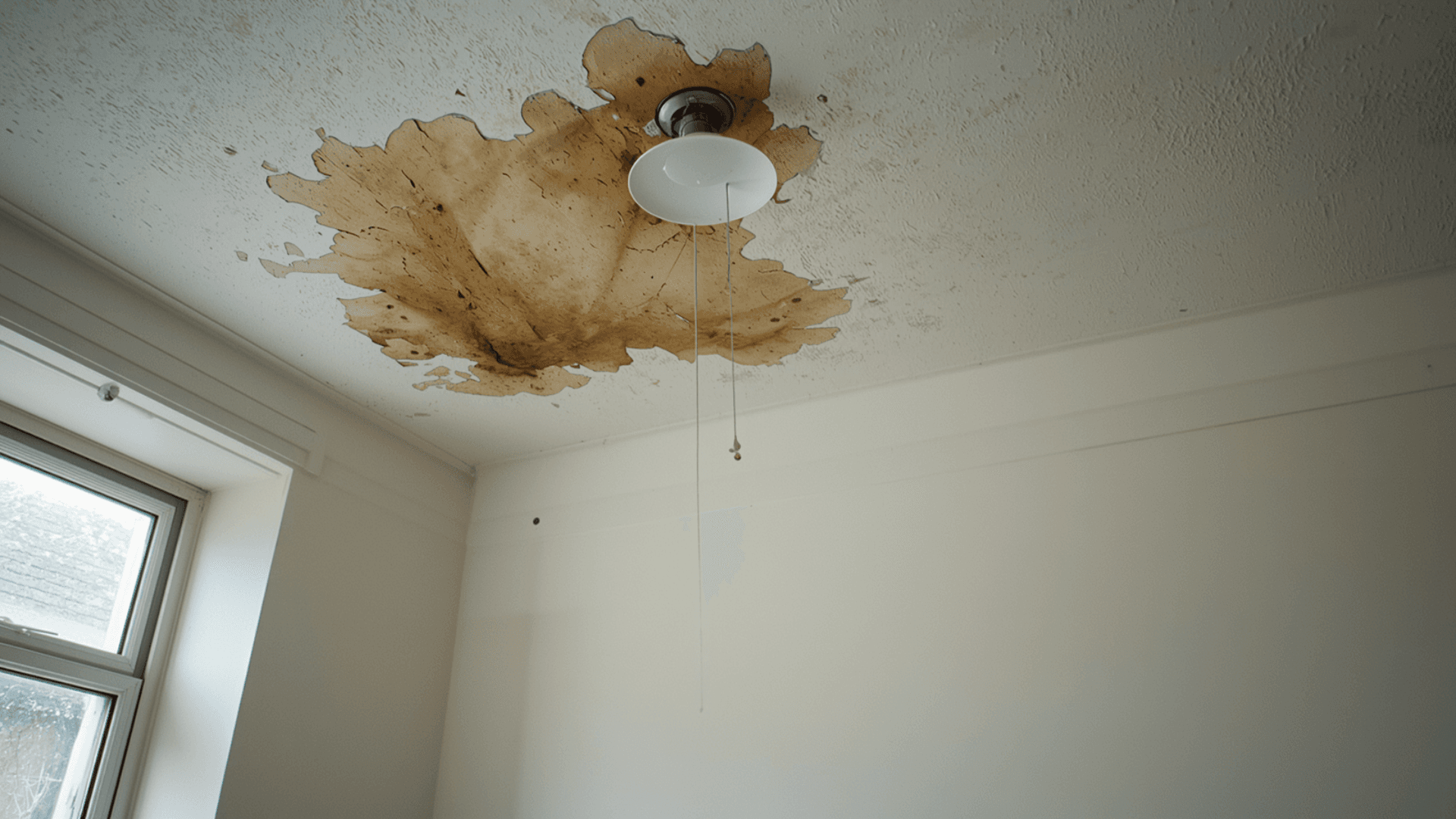
If you rent from a council or housing association and a roof leak has been reported but not properly fixed, you may be able to make a leaking roof compensation claim for repairs and compensation. Here is what to look for, what your landlord must do, and how a shared roof can affect a claim.
If a roof leak has been reported and not properly fixed, you may be able to claim repairs and compensation from your council or housing association.
Council and housing association landlords must keep the structure and exterior in repair, including the roof, gutters and drainpipes.
Water travels and soaks into insulation and plaster. Reporting early stops the damage growing.
Water near lights or sockets, or a bulging ceiling, is urgent. Keep clear and call your landlord's emergency repairs line.
A leaking roof does not always drip. Ceiling leaks often start as a stain, and the signs can appear well away from the roof itself.
Often rings that grow after rain. Water has been passing through repeatedly.
Moisture is trapped behind the surface of the plaster or paint.
Water may be pooling above. It can collapse. Keep clear and call emergency repairs.
An active leak. Note where it appears, and when: after rain, or in certain winds.
This points to water coming in from outside, rather than condensation.
Often the result of ongoing moisture from a leak above.
Often noticed before any stain appears.
A safety risk. Do not use the fitting, and tell your landlord it is an electrical hazard.
If you have safe access to the loft hatch, look from the hatch. Never step between joists.
You can often spot roof problems from the ground. Use binoculars or your phone camera zoom, and take dated photos.
Find out in minutes if you could claim compensation for a leaking roof. It costs you nothing to check.
We are a claims management company, not a law firm. You don't have to use us: you can complain to your landlord, then the relevant ombudsman*.
*England: Housing Ombudsman. Wales: Public Services Ombudsman
Water ingress is the technical term for water getting into a building. In a roof, it usually comes down to one of a few causes.
Water runs along rafters and felt before it drops. A stain can appear metres from where the water gets in.
Some only show in wind-driven rain from one direction, or after long wet spells. That makes them easy to dismiss, so keep a log.
Temporary fixes treat the symptom. If the leak returns after each storm, ask for the cause to be found and put right.
Use buckets and towels, and move furniture and valuables out of the way.
If water is near lights, sockets or the consumer unit, do not use them. Tell your landlord it is an electrical safety risk.
Ask for a reference number, and what timescale applies.
Photograph and video the leak, the stain and the buckets. Note the date and the weather.
For anything you buy to deal with the leak.
Do not climb up or use a ladder to inspect or patch it.
Keep clear and call emergency repairs.
Photograph them first, and wait until the source is fixed.
They tend to get worse, and the damage spreads.
Report and complain instead, and keep to your tenancy terms.
A leaking roof affects more than the ceiling.
Water near electrics is dangerous, and a wet ceiling can collapse.
Ongoing moisture often leads to mould on ceilings and walls, and it can affect health.
See our damp and mould guide.
Furniture, carpets, bedding and electricals can be ruined by water.
Wet insulation stops working properly, so the home gets colder and can cost more to heat.
A bedroom or living room can become unusable, which affects sleep and family life.
Every rainstorm becomes a worry, especially with children or health conditions in the home.
These duties apply to your tenancy automatically. Your landlord cannot contract out of them.
Section 11 covers the structure and exterior, and installations for water, gas, electricity, sanitation, and space and water heating.
Read the guideYour home must be fit to live in, including being free from serious damp, mould, leaks, and heating failures.
Read the guideSocial landlords in England must meet strict time limits to investigate and fix certain hazards, including damp and mould.
Read the guideCouncil and housing association landlords owe the same core repair duties. The route for complaining differs slightly, depending on who your landlord is.
If you rent from your council, or from an organisation it has set up to manage its homes, that landlord owes the repair duties above. Follow its complaints process first, then take it to the relevant ombudsman*. Your tenancy agreement names your landlord.
Housing association tenants have the same core repair rights, whether the landlord is a large national association or a small local one. Complain to your housing association first, then take it to the relevant ombudsman*.
Not sure who your landlord is? We can help check.
*England: Housing Ombudsman. Wales: Public Services Ombudsman
Water ingress compensation is not a fixed amount. It depends on how long the leak went on, how serious it was, how it affected you, and the evidence. There are no guarantees.
Fixing the roof, flashing, gutters, ceilings, and plaster once the source is found.
Bedrooms or living rooms you could not use while the leak continued.
Ruined furniture or electronics, and costs of drying out or replacing items.
Stress, sleep loss, or illness linked to damp and mould that followed the leak.
In writing, with photos of stains or drips and a description of when it worsens in rain.
Note dates, weather, and where water appeared. It helps show the link to the roof.
Use your landlord's complaints process if nothing meaningful happens.
If your landlord has not resolved the complaint, the ombudsman service is free.
A free check takes a few minutes and costs you nothing.
*England: Housing Ombudsman. Wales: Public Services Ombudsman
Find out in minutes if you could claim compensation for a leaking roof. It costs you nothing to check.
We are a claims management company, not a law firm. You don't have to use us: you can complain to your landlord, then the relevant ombudsman*.
*England: Housing Ombudsman. Wales: Public Services Ombudsman
Not sure who your landlord is? We can help check.
Answer a few quick questions about your home and what you've already reported.
What evidence helps your claimWe review what you tell us to see if a solicitor may be able to help.
If it looks suitable, we refer you to a specialist solicitor, who explains what happens next.
If your case is referred to a solicitor, we receive a referral fee from them. This is not charged to you.
This is general information, not legal advice. Government guidance, Housing Ombudsman reports, and Awaab's Law guidance may be updated. Check the date on linked resources.
It takes a few minutes and costs nothing to find out.
Remember
You don't have to use a claims management company. There is no guarantee that using a claims management company will make your claim quicker or get you a better outcome. You can complain to your landlord, then the relevant ombudsman*, for free.
*England: Housing Ombudsman. Wales: Public Services Ombudsman
