
You may be able to claim compensation
If faulty or dangerous electrics have not been properly fixed, you may be able to claim repairs and compensation from your council or housing association.
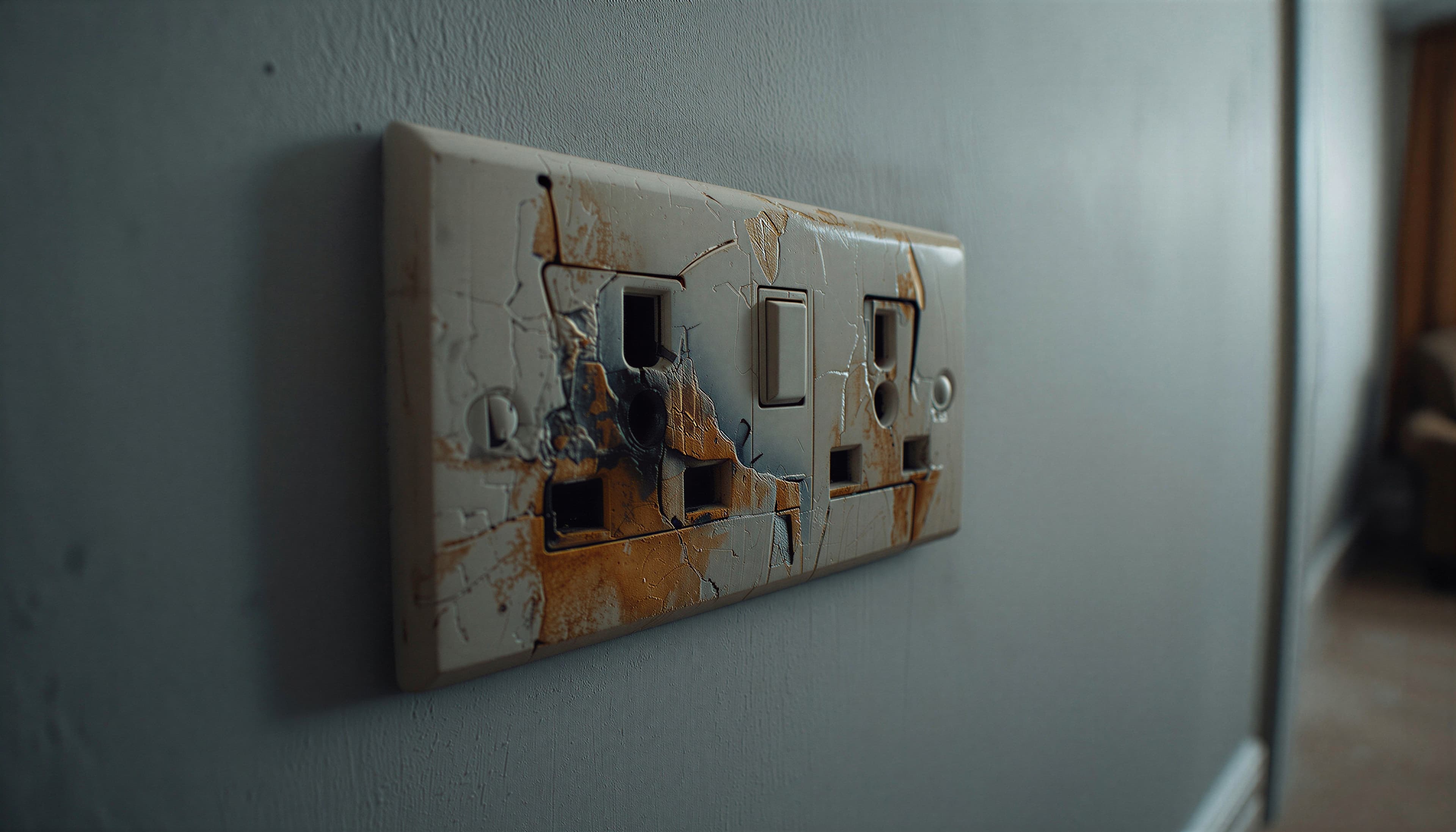
If you rent from a council or housing association and you are living with faulty wiring, a broken fuse board or sockets, or exposed cables that have not been properly fixed, you may be able to make a faulty electrics compensation claim for repairs and compensation. Here is how to tell what's dangerous right now, what's your landlord's job and what's yours, what a proper electrical safety check involves, and what evidence helps.
If faulty or dangerous electrics have not been properly fixed, you may be able to claim repairs and compensation from your council or housing association.
Council and housing association landlords must keep the electrical installation in your home in repair and working order: the wiring, consumer unit, sockets and fixed lighting.
Sparks, scorch marks, a burning smell or a tripping circuit that won't reset can be dangerous. Treat these as an emergency, not a routine repair.
Children, older people and anyone with a health condition or mobility issue are more at risk if electrics fail or catch fire. Tell your landlord in writing.
Electrical faults don't always look dramatic. These are the signs worth acting on.
Hot to the touch, discoloured or scorched faceplates, crackling noises, or a burning smell near a socket.
A circuit breaker (RCD or MCB) that trips repeatedly and won't stay reset, or a burning smell from the cupboard it's in.
Flickering lights, bulbs that blow very often, or a buzzing sound from a light fitting or switch.
Exposed or frayed wiring, cables that feel warm, or cables run across the floor or under carpets because there aren't enough sockets.
Any tingling sensation from a switch, socket or appliance, even a mild one. Treat this as a warning, not a one-off.
A burning or "hot plastic" smell, buzzing, crackling, or popping sounds from anywhere in the electrical system.
A few signs mean you should treat a fault as an emergency, not a routine repair request.
See sparks, smoke, scorch marks, or smell burning?
Switch off at the consumer unit if you can safely reach it, don't touch the fault or any affected appliance, and call your landlord's emergency repairs line straight away. If you see flames or smoke, get everyone out and call 999.
Sparks, visible flames, smoke, a strong burning smell, a scorched socket or switch, or an electric shock from anything in the home.
A circuit that keeps tripping, a socket that's warm to the touch, flickering lights across the home, or exposed wiring you can see but isn't sparking.
A single socket that doesn't work, a light fitting that needs a new bulb, or cosmetic damage to a faceplate with no exposed wiring.
The fixed electrical installation is your landlord's responsibility. Your own plug-in appliances are yours.
| What | What it covers | Who's responsible |
|---|---|---|
| Fixed wiring | Cables built into the walls, floors and ceilings, from the meter to every socket and light fitting | Your landlord |
| Consumer unit / fuse board | The box that distributes power and trips circuit breakers to protect you | Your landlord |
| Sockets and switches | The faceplates and connections fixed to the wall | Your landlord |
| Fixed lighting | Ceiling roses, fitted light fittings and the wiring to them | Your landlord |
| Communal electrics | Shared hallway, stairwell or landing lighting and power in flats | Your landlord, or its managing agent |
| Your own appliances and leads | Items you own: your kettle, television, phone charger, extension leads you've bought | You, as the owner |
| Light bulbs | Replacing a blown bulb in most cases | Usually you, unless it's a fixture only your landlord can safely access |
What fails, and how urgent it is, varies with the age and condition of the installation.
An ageing or damaged consumer unit, missing RCD protection, or circuits that trip and won't reset. Often only found when something else goes wrong.
Cables showing through damaged plaster, chewed by pests, or left exposed after other repair work. More common in older social housing stock.
Loose connections, cracked faceplates, or scorch marks that show a socket has overheated.
Flickering lights, failed ceiling roses, or fittings that buzz or overheat.
Older installations may lack residual current devices, which cut power quickly if there's a fault. This is a recognised safety gap, not just an inconvenience.
Shared lighting, door entry systems or power in blocks of flats, usually the landlord's or managing agent's responsibility.
Old fuse boxes with rewireable fuses rather than modern circuit breakers can be slower to cut power in a fault.
Water getting into sockets, light fittings or the consumer unit from an unrelated leak or damp problem. Report both issues.
Find out in minutes if you could claim compensation for faulty or dangerous electrics. It costs you nothing to check.
We are a claims management company, not a law firm. You don't have to use us: you can complain to your landlord, then the relevant ombudsman*.
*England: Housing Ombudsman. Wales: Public Services Ombudsman
A proper safety check, with the faults it finds actually fixed, is central to a safe home and to a claim.
Landlords must have the electrical installation in social housing inspected and tested, and give you the results. This is often called an EICR.
A full inspection and test is generally required at least every 5 years, or sooner if the previous report said so or a new tenancy starts.
Where the report flags a problem, your landlord must get the remedial work done within the timescale the report sets, and give you written confirmation it's been done.
A few things are safe to do yourself. Anything involving wiring, the consumer unit or sockets is not.
If you can safely reach it and a fault is active, isolating the circuit can prevent further damage or risk.
A scorch mark, exposed wire or tripped switch, with a date, helps your landlord and your evidence.
Use the emergency repairs line for anything urgent, and follow up in writing with a photo if you can.
If the fault is isolated to one circuit, other parts of the home may still be safe to use as normal. If in doubt, ask.
The date, who you spoke to, what was said and any reference number.
Leave the inside of the fuse board, fixed wiring and anything behind a faceplate to a qualified, registered electrician.
Electrical work in your home should be done by someone registered with a recognised competent person scheme.
A circuit that trips repeatedly is telling you something is wrong. Report it rather than just resetting it each time.
Stop using it and unplug anything connected to it until it's checked.
If you must in a genuine emergency, tell them straight away and keep the invoice.
Faulty electrics are not just an inconvenience. They affect safety, money and day-to-day life.
Faulty electrics are a leading cause of accidental house fires. A fault that isn't fixed properly can get worse, not better.
Even a mild tingle from a switch or socket is a sign something is wrong, and repeated exposure is dangerous.
Losing power to part or all of your home affects cooking, heating, charging essential equipment and simply living normally.
Replacing damaged appliances, buying extension leads as a stopgap, or an electrician's call-out if you've had to arrange one yourself.
Living with a safety risk you can't fix yourself, especially with children in the home, takes a toll.
A scorched socket or overheating cable can damage the wall around it, plug sockets, or anything plugged in at the time.
These duties apply to your tenancy automatically, and your landlord can't contract out of them.
Section 11 requires your landlord to keep the installations for the supply of electricity in repair and proper working order, including wiring, the consumer unit and fixed sockets.
Read the guideRegulations require landlords to have the electrical installation inspected and tested at least every 5 years, by a qualified person, and to act on anything it flags.
Your home must be fit to live in. A home with a serious electrical hazard may not be.
Read the guideElectrical safety is due to be brought into Awaab's Law's strict time limits from Phase 2, alongside excess cold and heat, falls, structural collapse, fire and explosions, and hygiene.
Read the guideCouncil and housing association landlords owe the same core repair duties. The complaints route differs slightly depending on who your landlord is.
If you rent from your council, or from an organisation it has set up to manage its homes, that landlord owes the repair duties above. Follow its complaints process first, then take it to the relevant ombudsman*. Communal electrics in blocks usually remain your landlord's responsibility, even if a managing agent or contractor runs the system.
Housing association tenants have the same core repair rights, whether the landlord is a large national association or a small local one. Complain to your housing association first, then take it to the relevant ombudsman*.
Not sure who your landlord is? We can help check.
*England: Housing Ombudsman. Wales: Public Services Ombudsman
| Date | What happened | Reported and reply |
|---|---|---|
| [date] | Socket sparked | Called [time], ref [number] |
| [date] | Circuit tripping | Emailed; told electrician due [date] |
| [date] | Electrician visited | Fault found, part ordered |
An example layout. Keep it up to date every time something happens.
There are no fixed amounts. They depend on the factors below, and there are no guarantees.
The fault properly fixed by a qualified electrician, and the electrical safety record updated.
For the disruption, inconvenience and any worry caused by living with a dangerous or unresolved fault.
Provable extra costs, such as a damaged appliance or an electrician you had to call yourself.
Any effect on your health, including the stress of living with a safety risk.
There is no set figure. What a claim could be worth depends on the facts. These are the things that usually matter:
Your solicitor can explain what your circumstances may support once your case has been assessed.
Isolate the circuit if you safely can, and use the emergency repairs line for anything dangerous. Follow up in writing with photos.
Note each date the problem occurred, what happened, and every call, visit and reply.
If it is not fixed in a reasonable time, use your landlord's complaints process.
It is free. If your landlord has not resolved the complaint, you can take it further.
You are not required to use us, but a free check takes a few minutes.
*England: Housing Ombudsman. Wales: Public Services Ombudsman
Find out in minutes if you could claim compensation for faulty or dangerous electrics. It costs you nothing to check.
We are a claims management company, not a law firm. You don't have to use us: you can complain to your landlord, then the relevant ombudsman*.
*England: Housing Ombudsman. Wales: Public Services Ombudsman
Not sure who your landlord is? We can help check.
Answer a few quick questions about your home and what you've already reported.
What evidence helps your claimWe review what you tell us to see if a solicitor may be able to help.
If it looks suitable, we refer you to a specialist solicitor, who explains what happens next.
If your case is referred to a solicitor, we receive a referral fee from them. This is not charged to you.
Last reviewed: 15 October 2026
Sources: UK Parliament written statement on Awaab's Law, 13 July 2026Housing Health and Safety Rating System operating guidanceHousing Ombudsman guidance
This is general information, not legal advice.
It takes a few minutes and costs nothing to find out.
Remember
You don't have to use a claims management company. There is no guarantee that using a claims management company will make your claim quicker or get you a better outcome. You can complain to your landlord, then the relevant ombudsman*, for free.
*England: Housing Ombudsman. Wales: Public Services Ombudsman
