
You may be able to claim compensation
If a structural problem has not been properly fixed, you may be able to claim repairs and compensation from your council or housing association.
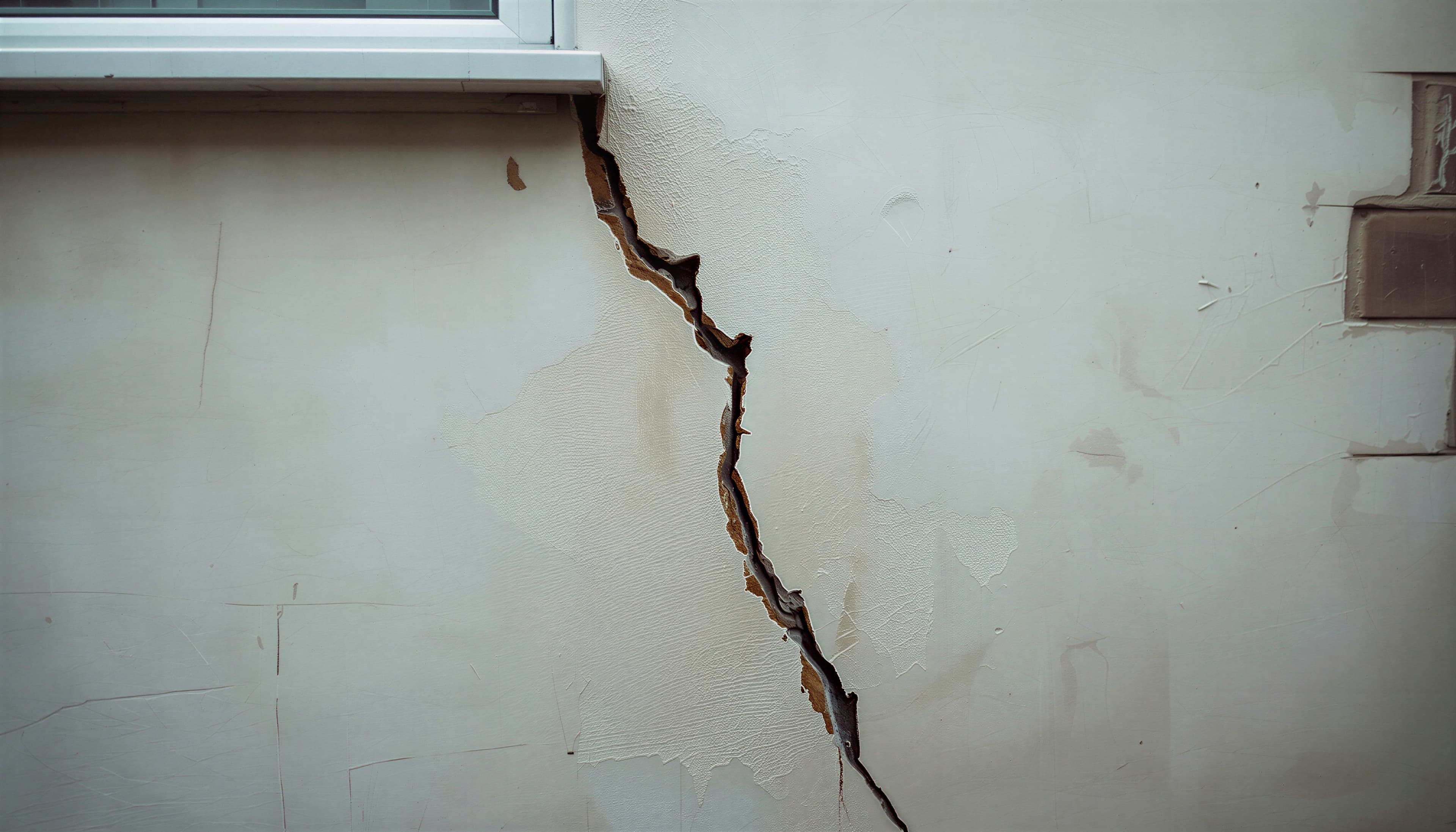
If you rent from a council or housing association and you are living with cracked walls, subsidence, movement, or another structural problem that has not been properly fixed, you may be able to make a structural problems compensation claim for repairs and compensation. Here is how to tell what's dangerous right now, what's your landlord's job and what's yours, how to read a crack, and what evidence helps.
If a structural problem has not been properly fixed, you may be able to claim repairs and compensation from your council or housing association.
Council and housing association landlords must keep the structure and exterior of your home in repair: walls, roof structure, foundations, floors and external walkways.
Many cracks are cosmetic and come from normal settlement. A few signs mean a crack needs looking at urgently, not just filling in.
Children, older people and anyone with mobility issues are more at risk if a structural problem affects safe access to or around the home. Tell your landlord in writing.
Structural problems don't always look dramatic. These are the signs worth acting on.
A crack that is wider than a pound coin, or that you can see getting bigger over weeks or months.
Cracks running diagonally from the corners of window or door frames, rather than straight up and down.
Doors or windows that suddenly stop closing properly, or gaps opening up around their frames.
A floor that visibly slopes, or that feels soft, bouncy or uneven underfoot.
Render, brickwork or external wall panels cracking, bulging or coming away from the wall.
New gaps opening up around skirting boards, door frames, or where an extension or porch joins the main house.
A few signs mean you should treat a structural problem as an emergency, not a routine repair request.
See a bulging or sagging ceiling, falling debris, or sudden rapid movement?
Leave the room or the property if you can do so safely, keep others away from the area, and call your landlord's emergency repairs line straight away. If the building feels unsafe to stay in, or there is a risk of collapse, get everyone out and call 999.
A bulging or sagging ceiling, falling debris, sudden or rapid new movement, or a crack you can see daylight or the outside through.
A crack wider than a pound coin, new diagonal cracking, a door or window that has suddenly stopped closing, or a sloping floor.
A thin, stable hairline crack with no other signs, especially one you recognise from before and that hasn't changed.
The building's structure and exterior are your landlord's responsibility. Minor decorating is usually yours.
| What | What it covers | Who's responsible |
|---|---|---|
| Walls, roof and foundations | The structure and exterior of the building, including load-bearing walls and the roof structure itself | Your landlord |
| Floors and joists | The structural floor and its supporting joists, not just the floor covering | Your landlord |
| External render, brickwork and cladding | The outer skin of the building and any cladding or external wall system | Your landlord |
| Balconies and external walkways | Structural balconies, access decks and walkways serving your home | Your landlord, or its managing agent |
| Internal plaster finish | Minor, stable cracking in the plaster skim that isn't linked to movement in the structure behind it | Often a shared or tenant decorating matter, but report it if you're unsure |
| Your own decorating | Wallpaper, paint and fittings you've added yourself | You |
| Garden structures you've added | A shed, fence or structure you've put up yourself, rather than one that came with the property | You, in most cases |
What's happening, and how urgent it is, depends on the cause and where it shows up.
Ground movement under or around the building that causes the structure to move, often showing up as cracking that gets steadily worse.
Hairline cracks in plaster are common and usually cosmetic. Wider, diagonal or growing cracks, especially running from window or door corners, can point to movement in the structure.
Sagging roof lines, spreading roof timbers, or a ridge that's no longer straight. This is different from a leaking roof, which is covered on its own page.
Metal ties that hold the inner and outer leaves of a cavity wall together can corrode and fail, sometimes showing as horizontal cracking or a bulging wall.
Sloping, bouncy or sagging floors, often linked to damp, rot or movement affecting the joists underneath.
Cracking, movement or visible deterioration in structural balconies, access decks or walkways.
Problems with cladding, render systems or insulation fixed to the outside of the building, including issues identified by an EWS1-type external wall survey.
Cracking where an extension, porch or outbuilding meets the original building, which can indicate the two parts are moving differently.
Find out in minutes if you could claim compensation for cracks, subsidence or other structural issues. It costs you nothing to check.
We are a claims management company, not a law firm. You don't have to use us: you can complain to your landlord, then the relevant ombudsman*.
*England: Housing Ombudsman. Wales: Public Services Ombudsman
A solicitor's rule of thumb: a crack roughly the width of a pound coin or wider is the point to start taking it seriously, especially alongside other signs.
| Category | Usually just cosmetic | Worth getting checked |
|---|---|---|
| Width | Narrower than a pound coin, stable over time | Wider than a pound coin, or visibly growing |
| Direction | Vertical or follows a straight plaster joint | Diagonal, often running from a window or door corner |
| Location | In the middle of a flat plastered wall or ceiling | Where an extension joins the house, or near corners and openings |
| Age | Old, painted over, unchanged for years | New, or reopening after being filled |
| What else is happening | Nothing else: doors and windows still work normally | Doors or windows sticking, floors sloping, gaps opening elsewhere |
A few things help your claim straight away. Anything involving the structure itself should be left to a qualified surveyor or engineer.
Use a ruler or a pound coin next to the crack, with the date, so the size is clear.
Even if you've reported it by phone, follow up in writing and keep a copy.
Note when you first noticed it, and any changes to its size, length or direction.
Sticking doors, sloping floors or gaps elsewhere can all be relevant, even if they don't seem connected.
If anyone in the household is more at risk, make sure your landlord has this in writing.
This can hide evidence of the problem getting worse, which matters for a claim.
Leave anything affecting walls, floors, the roof structure or foundations to a qualified professional.
This is often one of the first signs of structural movement, and is worth reporting alongside any cracking.
A bulging wall, sagging ceiling or unstable balcony should be avoided, not inspected up close.
Older buildings do move, but a professional assessment is the only way to know whether it's normal or not.
Structural problems are not just cosmetic. They can affect safety, warmth and day-to-day life.
Serious structural movement can risk collapse, falling debris or an unstable building, in rare but real cases.
Problems opening or closing doors and windows can affect fire escape routes and day-to-day life.
Cracks in the external wall let in water and cold air, which can lead to damp and mould inside the home.
Structural repairs can mean scaffolding, props, or even a temporary move while work is carried out.
Damage to belongings from falling debris or water ingress, or costs from a temporary move.
Living with visible cracking or movement in your home, especially with children, takes a toll.
These duties apply to your tenancy automatically, and your landlord can't contract out of them.
Section 11 requires your landlord to keep the structure and exterior of your home in repair, including walls, the roof structure and foundations.
Read the guideYour home must be fit to live in. A home with a serious structural hazard, including a risk of collapse, may not be.
Read the guideStructural collapse and falling elements are hazards local authorities can assess and act on under this system.
Read the guideStructural collapse is due to be brought into Awaab's Law's strict time limits from Phase 2, alongside excess cold and heat, falls, fire and explosions, electrical safety and hygiene.
Read the guideCouncil and housing association landlords owe the same core repair duties. The complaints route differs slightly depending on who your landlord is.
If you rent from your council, or from an organisation it has set up to manage its homes, that landlord owes the repair duties above. Follow its complaints process first, then take it to the relevant ombudsman*. Shared structural elements in blocks, such as external walls or balconies, usually remain your landlord's responsibility, even if a managing agent runs the building.
Housing association tenants have the same core repair rights, whether the landlord is a large national association or a small local one. Complain to your housing association first, then take it to the relevant ombudsman*.
Not sure who your landlord is? We can help check.
*England: Housing Ombudsman. Wales: Public Services Ombudsman
| Date | What happened | Reported and reply |
|---|---|---|
| [date] | Crack first noticed | Called [time], ref [number] |
| [date] | Crack wider, photographed | Emailed; told surveyor due [date] |
| [date] | Surveyor visited | Report awaited |
An example layout. Keep it up to date every time something changes.
There are no fixed amounts. They depend on the factors below, and there are no guarantees.
The structural problem properly assessed and fixed by a qualified professional.
For the disruption, inconvenience and any worry caused by living with an unresolved structural problem.
Provable extra costs, such as damaged belongings or a temporary move while work is carried out.
Any effect on your health or safety, including the stress of living with visible movement or cracking.
There is no set figure. What a claim could be worth depends on the facts. These are the things that usually matter:
Your solicitor can explain what your circumstances may support once your case has been assessed.
Keep clear of anything that looks unstable, and use the emergency repairs line for anything dangerous. Follow up in writing with photos.
Photos against a scale, dated, and every change you notice.
If it is not fixed in a reasonable time, use your landlord's complaints process.
It is free. If your landlord has not resolved the complaint, you can take it further.
You are not required to use us, but a free check takes a few minutes.
*England: Housing Ombudsman. Wales: Public Services Ombudsman
Find out in minutes if you could claim compensation for cracks, subsidence or other structural issues. It costs you nothing to check.
We are a claims management company, not a law firm. You don't have to use us: you can complain to your landlord, then the relevant ombudsman*.
*England: Housing Ombudsman. Wales: Public Services Ombudsman
Not sure who your landlord is? We can help check.
Answer a few quick questions about your home and what you've already reported.
What evidence helps your claimWe review what you tell us to see if a solicitor may be able to help.
If it looks suitable, we refer you to a specialist solicitor, who explains what happens next.
If your case is referred to a solicitor, we receive a referral fee from them. This is not charged to you.
Last reviewed: 15 October 2026
Sources: UK Parliament written statement on Awaab's Law, 13 July 2026Housing Health and Safety Rating System operating guidanceHousing Ombudsman guidance
This is general information, not legal advice.
It takes a few minutes and costs nothing to find out.
Remember
You don't have to use a claims management company. There is no guarantee that using a claims management company will make your claim quicker or get you a better outcome. You can complain to your landlord, then the relevant ombudsman*, for free.
*England: Housing Ombudsman. Wales: Public Services Ombudsman
