
You may be able to claim compensation
If a pest infestation has not been properly dealt with, you may be able to claim repairs and compensation from your council or housing association.
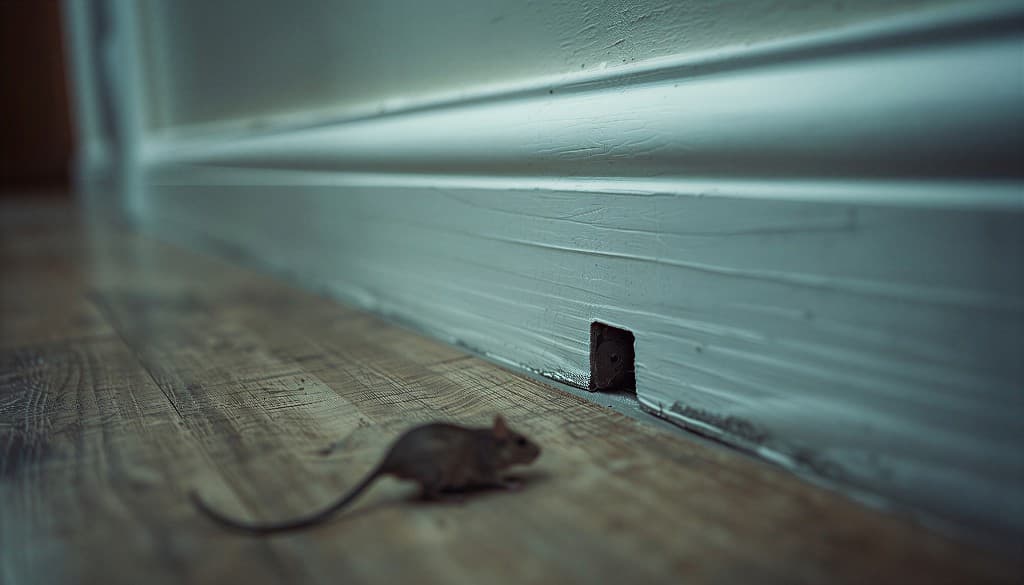
If you rent from a council or housing association and you are living with rats, mice, cockroaches or another infestation that has not been properly dealt with, you may be able to make a compensation claim. Here is how to tell what's urgent, whose job it is to fix it, when it's actually a different kind of claim altogether, and what evidence helps.
If a pest infestation has not been properly dealt with, you may be able to claim repairs and compensation from your council or housing association.
If there's no underlying disrepair causing it, you may have a different kind of claim instead. We explain the difference below.
Rats, mice and cockroaches are the pests most likely to support a claim. Others are treated differently.
Keep a simple record of when you reported it and what your landlord did. It's the single most useful thing you can do.
Not all infestations are treated the same way. This is a general guide, not a guarantee. Every case depends on the facts.
The most common pests behind a successful claim. Gnaw damage, droppings and entry points often point straight back to a repair your landlord hadn't made.
A serious hygiene and health risk. Often linked to damp, waste disposal problems, or gaps around pipework that let them spread between properties.
Most garden ants are a nuisance, not a claim. Pharaoh ants are different: they're a recognised indoor pest with health implications, and an infestation can sometimes point to an underlying heating or structural issue they're exploiting. Treated case by case.
Bed bugs can be a genuine problem, but claims based on bed bugs alone are often harder to bring. Causality is frequently disputed. Bed bugs can be introduced by a tenant's own belongings, visitors, or spread from a neighbouring property, and it isn't always possible to show your landlord's disrepair caused the infestation. A bed bug claim is more likely to succeed where it's clearly linked to a structural issue (for example, an infestation spreading through a shared wall or floor due to poor sealing).
Usually a seasonal, external issue rather than a sign of disrepair.
Normal for most homes and not usually something you can claim for.
Infestations don't always look dramatic. These are the signs worth acting on.
Along skirting boards, in cupboards, or near food storage.
On wiring, pipework, furniture, or stored belongings.
A persistent, stale or ammonia-like smell in a room or void space.
Even a single sighting is worth reporting and logging.
Cockroach casings and shed skins are a reliable sign of an established problem.
Can point to bed bugs; worth photographing and reporting early.
A few signs mean a pest problem needs treating as an emergency, not a routine repair request.
Rats indoors, or signs near electrics or gas?
Rodents gnawing wiring or pipework is a fire and gas-safety risk, not just a pest problem. If you see signs of this, report it to your landlord's emergency repairs line straight away and follow up in writing.
Rodent activity near electrics, gas appliances, or in large numbers indoors.
A significant infestation affecting daily life, health, or a vulnerable household member.
A single sighting or minor signs with no immediate safety risk, reported through the normal process.
Whether a pest infestation is a disrepair claim or a different kind of claim depends on what's causing it.
A hole, gap or crack in the structure is letting pests in
Damp, a leak, or a drainage problem is attracting pests
A door or window that won't seal properly is an entry point
Your landlord hasn't fixed the underlying problem causing or worsening the infestation
The property itself has no disrepair, but pests are present
The source is a neighbouring property or a wider area issue
There's no clear link between a repair failure and the infestation
Why this matters: a housing disrepair claim and an Environmental Protection Act (EPA) 1990 statutory nuisance claim are handled differently. A disrepair claim is about your landlord's failure to repair your home, run through the usual complaints and compensation route. An EPA claim is about a statutory nuisance (which can include some pest infestations) and is generally pursued through your local council's environmental health team, or directly through the magistrates' court, not as a standard housing disrepair claim.
Not every solicitor firm handles EPA matters. If your situation looks EPA-shaped rather than disrepair-shaped, we'll be upfront about that, and the referral path may be different from our usual process.
This is a general guide. The facts of your situation always matter most.
| What | What it covers | Who's responsible |
|---|---|---|
| Structural gaps, holes or cracks letting pests in | Covered by your landlord's repair obligations | Your landlord |
| Damp, leaks or drainage problems attracting pests | Covered if it's the underlying cause | Your landlord |
| Communal areas, refuse stores and shared bin areas | Pest control for shared spaces | Your landlord or managing agent |
| Day-to-day cleanliness and food storage | Normal good housekeeping | You, the tenant |
| Proofing entry points once identified | Making good after a pest control visit | Your landlord |
| Infestations introduced by your own belongings | For example, furniture brought into the property | You, the tenant (case by case) |
Find out in minutes if you could claim compensation for a pest infestation. It costs you nothing to check.
We are a claims management company, not a law firm. You don't have to use us: you can complain to your landlord, then the relevant ombudsman*.
*England: Housing Ombudsman. Wales: Public Services Ombudsman
Sometimes an infestation is being fed, at least partly, by conditions in a neighbouring property.
Your landlord's own repair and pest-control obligations apply regardless of the source. Don't wait to find out whose fault it is before reporting the problem.
If food waste, hoarding, or an untreated infestation next door is partly or wholly feeding the problem, the council has separate powers to investigate and require action at the source, including against another tenant, an owner-occupier, or a different landlord.
Reporting a neighbour to the council doesn't replace your own disrepair complaint. They're complementary: one deals with your home, the other with the source.
A few things help straight away.
Report it to your landlord in writing, with photos or video
Keep a simple log of sightings, droppings and any bites or marks
Store food in sealed containers while the problem is being dealt with
Ask for a copy of any pest control report or treatment plan
Report a neighbouring property to your council's environmental health team if it's contributing
Don't rely on your own pest control as a long-term fix for a structural cause
Don't ignore droppings or gnaw marks near electrics. Report promptly
Don't assume a single treatment visit has solved an ongoing structural problem
Don't let embarrassment stop you reporting it. Infestations are a repair issue, not a reflection on you
Don't attempt to seal up entry points yourself without reporting first. This can trap pests inside
These problems are not just unpleasant. They affect health, belongings and peace of mind.
Contamination of food and surfaces, allergens, bites, and the spread of disease associated with rodents and cockroaches.
Gnawed furniture, wiring, clothing and stored items.
Living with an infestation takes a toll, especially where there are children or vulnerable household members.
Treatment visits, having to move food and belongings, and noise or smell while the problem is ongoing.
Many tenants feel reluctant to report an infestation, or to have visitors, even though it isn't their fault.
Having to buy your own traps, repellents or cleaning products you shouldn't have had to pay for.
These duties apply to your tenancy automatically, and your landlord can't contract out of them.
Section 11 requires your landlord to keep the structure and exterior of your home in repair, including the gaps, cracks and defects that let pests in.
Read the guideYour home must be fit to live in. A home with an uncontrolled infestation can fail this test.
Read the guidePests and refuse are a recognised hazard category under HHSRS. Councils and housing associations can assess and act on this.
Read the guideCovers statutory nuisance, including some infestations, usually enforced through your council's environmental health team rather than through a disrepair claim.
Read the guideCouncil and housing association landlords owe the same core repair duties. The complaints route differs slightly depending on who the landlord is.
If you rent from a council, or from an organisation it has set up to manage its homes, the council owes the same core repair duties. Follow its complaints process first, and escalate to the relevant ombudsman if it isn't resolved. Shared entrance doors and communal refuse areas are usually the landlord's responsibility, even if a managing agent runs the building.
Housing association tenants have the same core rights, whether the landlord is a large national association or a small local one. Complain to your housing association first, then take it further to the relevant ombudsman.
Not sure who your landlord is? We can help check.
*England: Housing Ombudsman. Wales: Public Services Ombudsman
| Date | What happened | Reported and reply |
|---|---|---|
| [date] | Droppings found under kitchen sink | Reported by phone, ref [number] |
| [date] | Pest control visit, treatment applied | Treatment plan emailed |
| [date] | Signs persist after treatment | Follow-up requested |
An example layout. Keep it up to date every time something changes.
There are no fixed amounts. They depend on the factors below, and there are no guarantees.
How bad the infestation was, and how long it went on for.
Any bites, illness, allergic reaction, or risk to a vulnerable household member.
Treatments, repellents, cleaning products, or replaced belongings.
Whether it's a disrepair claim or an EPA matter can affect both the route and the value.
There is no set figure. What a claim could be worth depends on the facts. These are the things that usually matter:
Your solicitor can explain what your circumstances may support once your case has been assessed.
Report to your landlord straight away. If there's no clear disrepair cause, ask whether an EPA route via your council may fit better.
Note when you first noticed it, every sighting, and every call, visit and reply.
If it is not fixed in a reasonable time, use your landlord's complaints process.
It is free. If your landlord has not resolved the complaint, you can take it further.
You are not required to use us, but a free check takes a few minutes.
*England: Housing Ombudsman. Wales: Public Services Ombudsman
Find out in minutes if you could claim compensation for a pest infestation. It costs you nothing to check.
We are a claims management company, not a law firm. You don't have to use us: you can complain to your landlord, then the relevant ombudsman*.
*England: Housing Ombudsman. Wales: Public Services Ombudsman
Not sure who your landlord is? We can help check.
Answer a few quick questions about your home and what you've already reported.
What evidence helps your claimWe review what you tell us to see if a solicitor may be able to help.
If it looks suitable, we refer you to a specialist solicitor, who explains what happens next.
If your case is referred to a solicitor, we receive a referral fee from them. This is not charged to you.
Last reviewed: 15 October 2026
Sources: UK Parliament written statement on Awaab's Law, 13 July 2026Housing Health and Safety Rating System operating guidanceEnvironmental Protection Act 1990, Part III, statutory nuisance guidance
This is general information, not legal advice.
It takes a few minutes and costs nothing to find out.
Remember
You don't have to use a claims management company. There is no guarantee that using a claims management company will make your claim quicker or get you a better outcome. You can complain to your landlord, then the relevant ombudsman*, for free.
*England: Housing Ombudsman. Wales: Public Services Ombudsman
