
You may be able to claim compensation
If a broken window, door or lock has not been properly fixed, you may be able to claim repairs and compensation from your council or housing association.
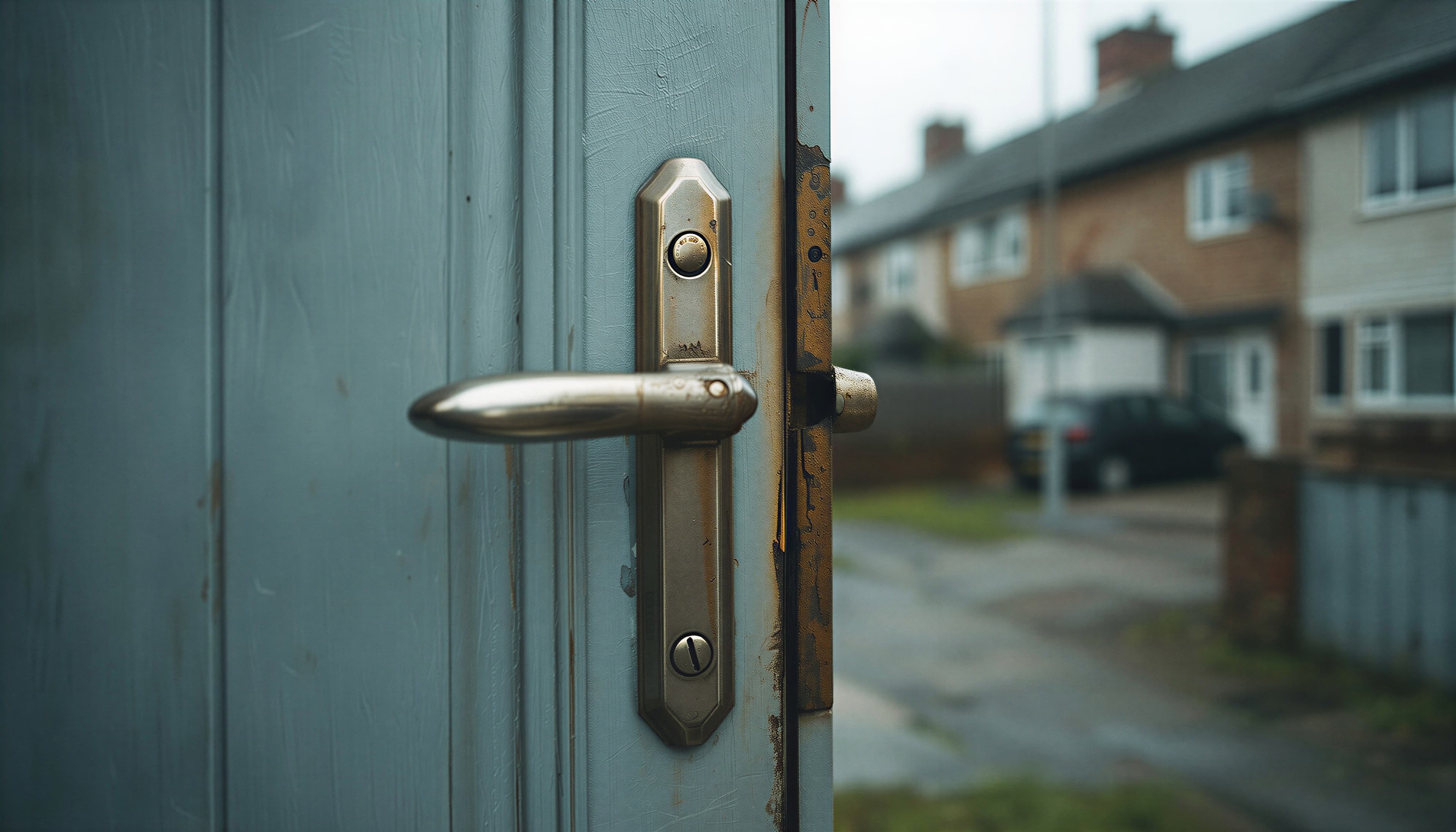
If you rent from a council or housing association and you are living with a broken window, an external door that won't close or lock properly, or a faulty lock that has not been properly fixed, you may be able to make a compensation claim for repairs and compensation. Here is how to tell what's urgent, what's your landlord's job and what's yours, what your landlord owes you on security, and what evidence helps.
If a broken window, door or lock has not been properly fixed, you may be able to claim repairs and compensation from your council or housing association.
Council and housing association landlords must keep the external windows, external doors and their locks and fastenings in repair.
A door or window that won't lock, especially after a break-in, should be treated as an emergency repair, not a routine one.
Children, older people and anyone who feels unsafe are more at risk from a security or fire-escape problem. Tell your landlord in writing.
These problems don't always look dramatic. These are the signs worth acting on.
Cold air, whistling, or water coming in around a window or door frame, even when it's closed.
A window that's stuck shut, won't stay open, or won't close fully, including a jammed window restrictor.
A key that's hard to turn, a lock that doesn't engage properly, or a door that doesn't sit flush in its frame.
Splintered wood, a bent frame, or a door that no longer closes properly after someone has tried to force it.
Soft, crumbling wood around a window or door, or hinges and locks that are rusted and seizing up.
A cracked pane, broken glass, or condensation trapped between the panes of a double-glazed unit.
A few signs mean a window, door or lock problem needs treating as an emergency, not a routine repair request.
Broken glass, a door that won't lock after a break-in, or a jammed fire-escape window?
If there has been a break-in or attempted break-in, call the police first and get a crime reference number. Then call your landlord's emergency repairs line to get the property made secure. A fire-escape window or door that won't open is also an emergency: report it straight away.
A break-in or attempted break-in, broken glass, a door or window that won't lock or close at all, or a jammed fire-escape window or door.
A stiff or loose lock, a draughty window, a window restrictor that's jammed, or a door that doesn't sit flush in its frame.
A worn handle, a key that needs a little extra effort, or cosmetic damage to a frame with no effect on security or opening.
External windows, doors and the locks that came with them are your landlord's responsibility.
| What | What it covers | Who's responsible |
|---|---|---|
| External windows and frames | The window units, their frames and fittings that came with the property | Your landlord |
| External doors and frames | Front, back and other external doors, including their frames | Your landlord |
| Original locks and door furniture | Locks, hinges and handles fitted by your landlord | Your landlord |
| Communal entry doors and intercoms | Shared entrance doors, intercoms and entry systems in blocks of flats | Your landlord, or its managing agent |
| Window restrictors | Devices fitted to limit how far a window opens, especially on upper floors | Your landlord |
| Replacement keys you've lost | Getting a new key cut if you've lost yours, rather than if the lock itself has failed | You, in most cases |
| Extra locks or chains you've added yourself | Additional security you've fitted that wasn't there when you moved in | You, usually with your landlord's permission needed first |
| Internal doors you've damaged | Damage you or a visitor have caused to internal doors, as opposed to normal wear and tear | You |
What's wrong, and how urgent it is, depends on the type of fault and where it is.
Condensation trapped between the panes, which means the seal has failed. Usually a sign the unit needs replacing, not just cleaning.
Older sash windows relying on cords and weights, or hinges on casement windows, wearing out or snapping.
The multi-point locking mechanisms in UPVC doors and windows can fail internally even when the door or window looks fine.
Timber frames that have softened or rotted, often linked to a leak or long-standing damp nearby.
A shared entrance door, lock or intercom not working in a block of flats, which is a security issue for everyone in the building.
A fire door that no longer closes and seals properly, which affects fire safety as well as security.
A restrictor that's missing, broken, or has been removed, which matters especially where children live on upper floors.
Splintered frames, bent locks or a door knocked off its hinges following a break-in or attempted break-in.
Find out in minutes if you could claim compensation for a broken window, door or lock. It costs you nothing to check.
We are a claims management company, not a law firm. You don't have to use us: you can complain to your landlord, then the relevant ombudsman*.
*England: Housing Ombudsman. Wales: Public Services Ombudsman
This matters beyond ordinary repair: being unable to secure your home affects how safe you feel in it.
Your landlord has a duty to keep external doors, windows and their locks in proper working order, which includes keeping your home reasonably secure.
A temporary board over a broken window or door counts as making the property secure in an emergency. It is not a substitute for a proper, permanent repair.
If a board-up or a makeshift repair has been left in place for weeks, press for the permanent repair to be completed, and keep a record of how long it's taken.
A few things help straight away. Anything structural to the window, door or lock mechanism should go through your landlord.
Use the emergency repairs line for anything affecting security or fire escape, and follow up in writing with a photo.
If there's been a break-in or attempted break-in, report it to the police and keep the reference number for your landlord and any claim.
Don't throw away a broken lock or damaged fitting until your landlord has seen it or you've photographed it clearly.
A temporary board-up or a fitted lock that's just "good enough for now" should still be followed up until it's properly fixed.
Report a missing or broken restrictor straight away, especially on an upper floor.
Wedging furniture against a door or taping over broken glass is not a substitute for a proper repair, and isn't safe long-term.
Leave this to your landlord, especially if children live in the home.
This is a safety issue as well as a repair issue. Report it as urgent.
Keep a record of how long it's been, and chase for the permanent repair.
If you must arrange an emergency repair yourself, tell them straight away and keep the invoice.
These problems are not just an inconvenience. They affect safety, warmth and peace of mind.
A door or window that won't lock leaves your home, and your belongings, at greater risk.
Draughts and water ingress around frames can make a home colder and contribute to damp and mould.
A window or door that won't open properly can block an escape route in an emergency.
Temporary security measures you've had to arrange or pay for yourself, or a locksmith call-out.
Feeling unsafe in your own home, especially after a break-in, takes a real toll.
Living with a boarded window or a door that doesn't close properly affects everyday life, noise and privacy.
These duties apply to your tenancy automatically, and your landlord can't contract out of them.
Section 11 requires your landlord to keep the structure and exterior of your home in repair, which includes external windows and doors.
Read the guideYour home must be fit to live in. A home that can't be properly secured, or that has a blocked fire escape, may not be.
Read the guideEntry by intruders and falls are both hazards local authorities can assess and act on under this system, which is why locks, windows and restrictors matter.
Read the guideFalls are due to be brought into Awaab's Law's strict time limits from Phase 2, which is relevant to broken window restrictors, alongside excess cold and heat, structural collapse, fire and explosions, electrical safety and hygiene.
Read the guideCouncil and housing association landlords owe the same core repair duties. The complaints route differs slightly depending on who your landlord is.
If you rent from your council, or from an organisation it has set up to manage its homes, that landlord owes the repair duties above. Follow its complaints process first, then take it to the relevant ombudsman*. Shared entrance doors, intercoms and security in blocks usually remain your landlord's responsibility, even if a managing agent runs the building.
Housing association tenants have the same core repair rights, whether the landlord is a large national association or a small local one. Complain to your housing association first, then take it to the relevant ombudsman*.
Not sure who your landlord is? We can help check.
*England: Housing Ombudsman. Wales: Public Services Ombudsman
| Date | What happened | Reported and reply |
|---|---|---|
| [date] | Lock stopped working | Called [time], ref [number] |
| [date] | Break-in attempted | Police ref [number]; landlord emailed |
| [date] | Temporary board fitted | Permanent repair awaited |
An example layout. Keep it up to date every time something changes.
There are no fixed amounts. They depend on the factors below, and there are no guarantees.
The window, door or lock properly fixed, restoring full security and safe operation.
For the disruption, inconvenience and any worry caused by living with an unresolved security or safety problem.
Provable extra costs, such as a locksmith, temporary security, or a replacement you had to arrange yourself.
Any effect on your health or safety, including the stress of feeling unsafe in your own home.
There is no set figure. What a claim could be worth depends on the facts. These are the things that usually matter:
Your solicitor can explain what your circumstances may support once your case has been assessed.
Get a crime reference number if there's been a break-in, and use the emergency repairs line for anything affecting security or fire escape.
Note when you first noticed it, and every call, visit and reply.
If it is not fixed in a reasonable time, use your landlord's complaints process.
It is free. If your landlord has not resolved the complaint, you can take it further.
You are not required to use us, but a free check takes a few minutes.
*England: Housing Ombudsman. Wales: Public Services Ombudsman
Find out in minutes if you could claim compensation for a broken window, door or lock. It costs you nothing to check.
We are a claims management company, not a law firm. You don't have to use us: you can complain to your landlord, then the relevant ombudsman*.
*England: Housing Ombudsman. Wales: Public Services Ombudsman
Not sure who your landlord is? We can help check.
Answer a few quick questions about your home and what you've already reported.
What evidence helps your claimWe review what you tell us to see if a solicitor may be able to help.
If it looks suitable, we refer you to a specialist solicitor, who explains what happens next.
If your case is referred to a solicitor, we receive a referral fee from them. This is not charged to you.
Last reviewed: 15 October 2026
Sources: UK Parliament written statement on Awaab's Law, 13 July 2026Housing Health and Safety Rating System operating guidanceHome Office guidance on reporting crime
This is general information, not legal advice.
It takes a few minutes and costs nothing to find out.
Remember
You don't have to use a claims management company. There is no guarantee that using a claims management company will make your claim quicker or get you a better outcome. You can complain to your landlord, then the relevant ombudsman*, for free.
*England: Housing Ombudsman. Wales: Public Services Ombudsman
