
Housing disrepair claims can fail because of avoidable mistakes. This guide explains ten common errors and how to avoid them. This free guide for council and housing association tenants in England and Wales is published by Council Repair Claims, a regulated claims management company, not a law firm.
Top 10 Mistakes Tenants Make in Housing Disrepair Claims

When a housing disrepair claim fails, or settles for less than it should, the disrepair itself is rarely the reason. In many cases, avoidable mistakes made before a solicitor or claims management company was involved are what weaken the case.
Understanding where claims go wrong gives you the best chance of building one that holds up.
Key Points
- Claims can fail, or settle for less than they should, not because the disrepair was not real but because of avoidable mistakes made before legal advice was sought. Understanding the most common errors early gives you the best chance of building a strong case.
- One of the most common reasons claims are weakened is the absence of evidence that the landlord was notified. Written notice is usually the strongest evidence, although notice does not necessarily have to be in writing.
- Courts can and do reduce or dismiss claims where tenant behaviour contributed to the disrepair or where access was refused.
- Accepting a payment intended to settle a complaint could affect your ability to bring a later claim, particularly if you sign an agreement releasing further claims.
- In most cases, proceedings should be started within six years of the landlord's breach of duty, although determining precisely when that period begins can be legally complex.
- Before instructing any CMC or solicitor, verify them on the FCA register (for CMCs) or the SRA register (for solicitors). See the guide to spotting housing disrepair scams.
If your landlord has ignored a repair you reported in writing, it is worth finding out where you stand.
There is no charge for our assessment, and no obligation to continue.
This guide covers the ten most common errors, drawn from county court decisions, legal commentary and the pattern of cases reviewed by housing law specialists.
Mistake 1: Reporting the problem verbally and not following up in writing

One of the most common reasons a housing disrepair claim is weakened is the absence of evidence that the landlord was notified about the problem. While notice does not necessarily have to be in writing, written records are usually the strongest form of evidence if a dispute later arises about what was reported and when.
For many types of disrepair, a landlord's obligation to remedy the defect arises once they know, or ought reasonably to know, about the problem. If you cannot demonstrate when the landlord became aware of the issue, it may be difficult to establish the period for which they are responsible. Written reports, emails, portal submissions and follow-up correspondence provide a clear evidential trail.
The mistake is not just failing to create an evidence trail in the first place. It is also failing to follow up with a letter or email that confirms what was reported verbally and when. A message that says "as I mentioned when I called on [date], the bathroom wall has a damp patch coming through from outside" creates a written record that protects you even if the original call went unrecorded.
How to avoid it: Report every repair issue in writing, even if you also call. Use email where possible so you have a timestamp. If your landlord has an online repairs portal, use it and screenshot your submission. Keep copies of everything. Our step-by-step claims checklist has a section on building a written evidence trail from the start.
Mistake 2: Leaving too long a gap before reporting
Every month that passes without a formal report is a month where the landlord's liability arguably did not run. Courts reduce damages for the period before notice was given, and a landlord can argue that the disrepair worsened because the tenant failed to act promptly.
Tenants often delay because they assume a casual mention to a landlord or contractor will automatically create a reliable record. While verbal notice can sometimes be sufficient, it is often much harder to prove later if there is a dispute. Others wait because they are hopeful the landlord will act without pressure, or because they do not want to seem difficult. The practical result is a claim that starts months or years later than it should, with a compensation calculation that reflects a shorter period of disrepair.
How to avoid it: Report in writing as soon as you notice a problem. You do not have to wait until the issue becomes severe. A damp patch noticed in October, reported in October, is a very different case from one first reported the following March after the mould has spread. See our guide to reporting repairs to your council or housing association for the correct channels.
Mistake 3: Describing the symptom rather than the defect
"The bathroom is damp" is not the same as "there is penetrating damp entering through the external wall of the bathroom, first reported in writing on [date]." Courts and solicitors need to know what the defect is, not just what it looks like from inside.
This distinction matters legally. Landlord liability under section 11 attaches to specific structural failures, installation faults and external disrepair, not to the general experience of living in a damp home. A claim built on vague descriptions of symptoms can be challenged on the basis that the landlord was never given proper notice of the defect that caused them.
In one Manchester County Court case, Dalton v ForHousing Ltd (June 2023), the judge criticised aspects of the claimant's evidence, finding that records relating to dates and defects had been misunderstood and that parts of the evidence lacked clarity and consistency. As a county court decision, the case is fact-specific and not binding authority, but it illustrates the importance of describing alleged defects accurately and consistently.
How to avoid it: When reporting, describe the physical defect as specifically as you can: where it is, when you first noticed it, what you believe is causing it. If the roof is leaking, say so. Do not just say the ceiling is stained. Our evidence guide explains the six types of evidence that support a strong claim.
Mistake 4: Assuming a patch-fix means the problem has been resolved
Landlords sometimes carry out a quick repair rather than addressing the underlying cause: repainting over mould rather than fixing the damp that causes it, applying temporary roof sealant rather than replacing damaged tiles, or filling a crack without investigating the structural movement behind it.
If the problem returns, many tenants assume the clock restarts from zero. In most cases it does not. The original date of notice usually still stands, and the failed repair can actually strengthen a claim by showing the landlord was aware of the defect and failed to remedy it properly.
The danger is that tenants who accept a patch-fix, stop documenting and then do not follow up lose the evidence thread that runs from their original report. Months later, the claim looks like a new complaint rather than a continuing failure.
How to avoid it: Photograph any "completed" repairs and continue monitoring. If the same problem returns, report it in writing again, referencing your original report by date. A short letter saying "the mould has returned following the work carried out on [date], which suggests the underlying cause was not resolved" is exactly the kind of record that supports a successful claim.
Mistake 5: Allowing access to be used against you, or refusing it
This cuts both ways, and it is one of the most legally significant mistakes on this list.
If you block or repeatedly reschedule contractor visits, a landlord has a direct and powerful defence: they cannot be liable for failing to repair a problem they were prevented from accessing. This was a direct factor in the Dalton v ForHousing Ltd dismissal, where there was evidence the claimant had refused access to contractors and even to expert witnesses.
But the opposite problem also exists. Some tenants are reportedly advised not to allow repair work to proceed, on the basis that completing the repair weakens the compensation claim. Aside from the ethical problems with that approach, it leaves you living in poor conditions indefinitely and gives the landlord material to argue that access was obstructed.
You are entitled to reasonable notice before any visit and to refuse access if the timing is genuinely inconvenient, but if you reschedule, do it in writing and propose an alternative promptly.
How to avoid it: Keep a log of every appointment offered, attended, or cancelled. If you need to reschedule, do so by email and offer an alternative date in the same message. If a contractor attends without reasonable notice and you cannot let them in, record this immediately.
Mistake 6: Accepting informal compensation without taking advice first
Some landlords respond to disrepair complaints by offering a rent reduction, a goodwill payment or a voucher directly to the tenant. The offer may seem fair and you may be tempted to accept it and move on.
The risk is that accepting a payment intended to settle your complaint may affect your ability to pursue a further claim later. Much will depend on what was agreed, what documents were signed and whether the parties intended the payment to be a full and final settlement.
This is particularly important because disrepair compensation can include not only a rent reduction for the period of poor conditions but also damages for damaged belongings, health impacts and loss of amenity. A "goodwill" payment rarely reflects the full picture. For more on how compensation is calculated, see our housing disrepair compensation guide.
How to avoid it: Do not sign or agree to anything described as settling a repair complaint without first getting independent advice. Many solicitors and FCA-authorised CMCs offer free initial assessments and may offer a no-win, no-fee arrangement, although the terms vary between providers. See how no-win, no-fee works.
Mistake 7: Documenting the damage but not the impact
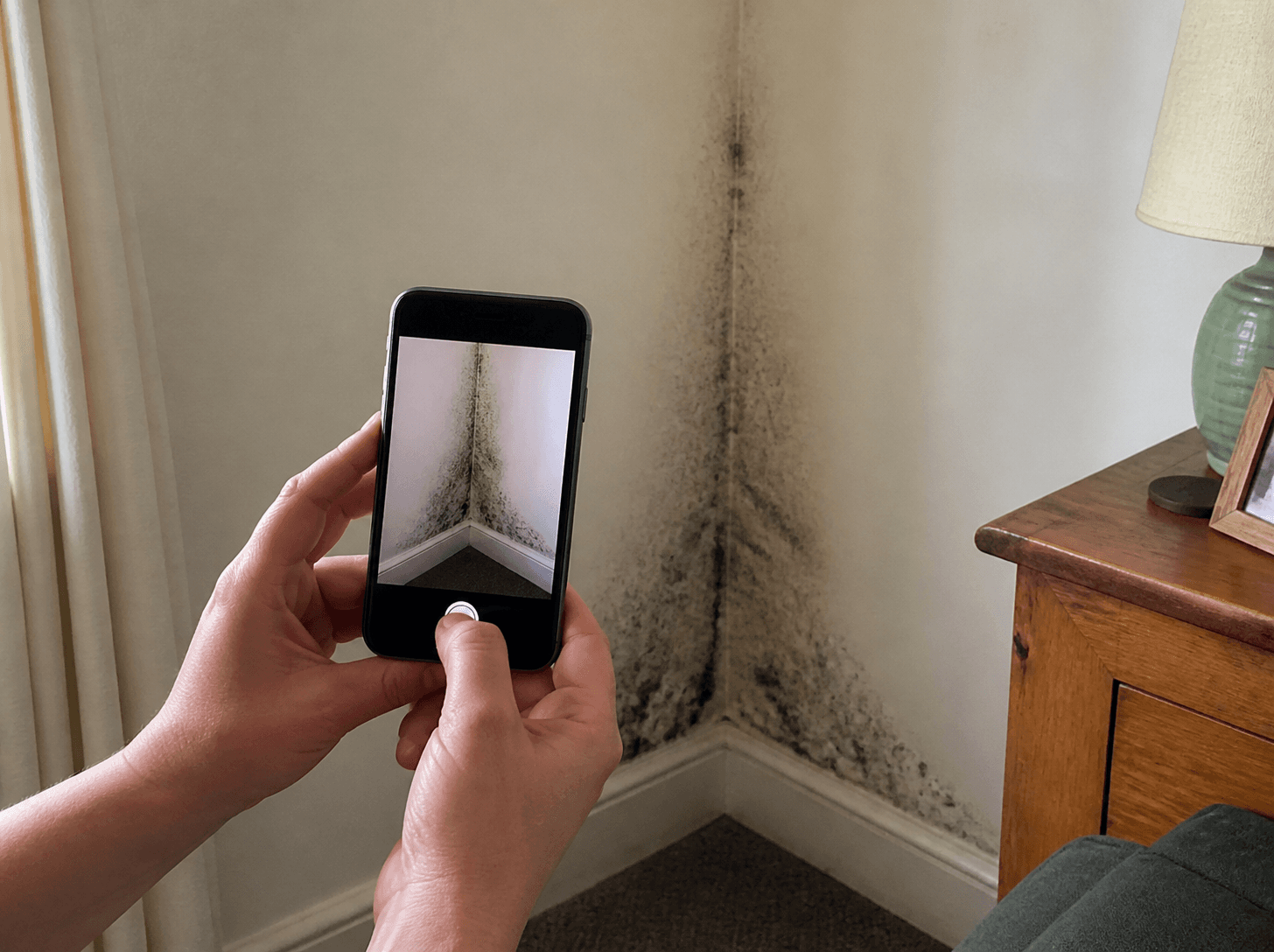
A housing disrepair claim has two distinct parts. The first is the disrepair itself: what was wrong, when it was reported, and what the landlord failed to do. The second is the impact on you: the effect on your health, your daily life, and your belongings.
Tenants often photograph the mould or the leak, but keep no record of the impact on their daily life: the nights lost to sleep because of damp, the rooms they could not use, the belongings that were ruined, the GP appointments they had to make, or the school days their children missed because of respiratory illness. Without that secondary evidence, the damages awarded even on a successful claim can be significantly lower.
Compensation for housing disrepair is often assessed by reference to the reduction in the property's rental value or the loss of comfort and convenience experienced by the tenant during the period of disrepair. The Court of Appeal in Wallace v Manchester City Council [1998] recognised that a notional rent reduction can be a useful way of valuing this loss, although it is not the only approach available to the court. But special damages for personal losses (ruined furniture, medical costs, extra heating bills) require itemised evidence.
How to avoid it: Keep a diary, even a brief one. A few lines per week noting which rooms were unusable, any physical symptoms and any expenditure caused by the disrepair is far more useful than a detailed account written from memory a year later. Photograph damaged belongings and keep receipts or bank statements showing the cost of replacement.
Mistake 8: Not understanding tenant maintenance responsibilities
Not all disrepair is the landlord's responsibility. Tenants are generally expected to carry out minor maintenance tasks (changing light bulbs, keeping drains clear, reporting small problems before they become large ones, and managing condensation by ventilating the property) as part of what courts call "tenant-like manner" obligations.
More significantly, where a tenant's own behaviour has caused or substantially contributed to disrepair, a court will reduce or dismiss the claim accordingly. In Dalton v ForHousing Ltd, the judge found that the mould was partly attributable to the claimant herself: she had sealed a ventilation duct, blocked airflow with clutter and dried laundry on radiators. These findings came not from the landlord's witnesses, but partly from the claimant's own expert.
This does not mean tenants cannot claim for mould. It means a claim will be stronger if the tenant can show they managed condensation reasonably and that the root cause was structural rather than behavioural.
How to avoid it: Read your tenancy agreement to understand what minor maintenance falls to you. Keep rooms ventilated, use extractor fans when cooking and showering, and avoid drying clothes on radiators where possible. If a landlord argues the mould is your fault, our damp and mould guide explains the distinction between structural damp and condensation, and when the responsibility lies with the landlord.
Mistake 9: Not knowing where the six-year limitation window starts
A housing disrepair claim is commonly brought in contract, tort, or both. In many cases, the limitation period is six years under the Limitation Act 1980. However, determining precisely when that period begins can be more complicated than many tenants realise.
A common misunderstanding is that the clock starts when a tenant decides to bring a claim. In reality, it generally runs from the landlord's alleged breach of duty. In continuing disrepair cases, identifying the relevant dates can require careful legal analysis, particularly where problems have persisted or worsened over time.
The practical consequence is that tenants who reported problems years ago but have no written record of doing so may find that part or all of that period is lost, even if the disrepair is still present today.
How to avoid it: If you have been living with unresolved disrepair for a long time, take legal advice sooner rather than later. The earlier you speak to a solicitor or FCA-authorised CMC, the better your chances of preserving the full limitation period. Waiting costs you time you cannot get back.
Mistake 10: Choosing a firm based on a cold call rather than credentials
The housing disrepair market has a significant problem with unsolicited approaches: cold calls, door-to-door visitors and social media adverts from companies offering to pursue claims on a no-win, no-fee basis. Some of these are from legitimate, regulated firms. Some are not. And even among regulated firms, the referral-driven nature of the market means that the firm contacting you may not be the best one to act in your interests.
Some commentators have argued that financial incentives within parts of the housing disrepair market do not always align perfectly with tenants' interests. One example discussed by Property118 involved a claim where legal costs substantially exceeded the compensation ultimately received by the tenant. While such examples do not represent every claim, they demonstrate why tenants should take time to understand how any arrangement works before instructing a representative.
Failed claims carry their own risk: the court costs awarded against tenants in dismissed cases have reached thousands of pounds. City of York Council publicised a January 2025 case in which a tenant whose claim was dismissed was ordered to pay costs of £7,964.75.
How to avoid it: Never instruct a firm solely because they contacted you. Check any claims management company on the FCA financial services register. Search by company name and confirm their permission covers claims management. Check solicitors on the SRA register. Take your time and compare more than one firm. Our guide to housing disrepair solicitors explains what to look for and what questions to ask. And if you have been cold-called or approached at the door, read our guide to housing disrepair claim scams before you sign anything.
What to do next
If you have been living with unresolved housing disrepair and you have not yet taken formal steps, the best starting point is to get an honest assessment of your situation.
using our free eligibility tool.
Read our step-by-step claims checklist to see where your case stands.
Understand how no-win, no-fee works before you commit to any firm.
Review our evidence guide to make sure you have what you need.
Ashworth & Ingram Compensation Partners Limited is authorised and regulated by the Financial Conduct Authority (FRN 1042169). We are a claims management company, not a law firm. Legal services are provided by our panel solicitors.
If your landlord has ignored a repair you reported in writing, it is worth finding out where you stand.
There is no charge for our assessment, and no obligation to continue.
Frequently Asked Questions
Related guides

Step-by-Step Housing Disrepair Claims Checklist
3 min read
A practical housing disrepair claims checklist for council tenants: report the problem in writing, gather evidence, and understand next steps.
Read guide
What evidence do you need for a housing disrepair claim?
6 min read
Photos, written reports, medical records and losses: evidence that strengthens a housing disrepair claim, even if you have not kept records.
Read guide
How to Spot and Avoid Housing Disrepair Claim Scams
9 min read
Learn how to identify housing disrepair claim scams, verify FCA and SRA registration, and avoid unregulated claims handlers.
Read guideNeed Help?
Council Repair Claims can help you understand whether your situation may support a disrepair claim and, if appropriate, refer you to a regulated solicitor. There is no charge for our assessment, and no obligation to continue. If you choose to go ahead, the solicitor will explain their own terms and any charges before you agree.
Contact us on 03330 111104 or email info@councilrepairclaims.co.uk
Council Repair Claims is the trading name of Ashworth & Ingram Compensation Partners Limited, authorised and regulated by the Financial Conduct Authority as a claims management company (FRN 1042169). This article is for general information only and does not constitute legal advice. Outcomes depend on the specific circumstances of each case.
Content correct as of Oct 2026.